
Chrissy Steltz never imagined a single moment at a friend’s gathering would rewrite her entire existence.
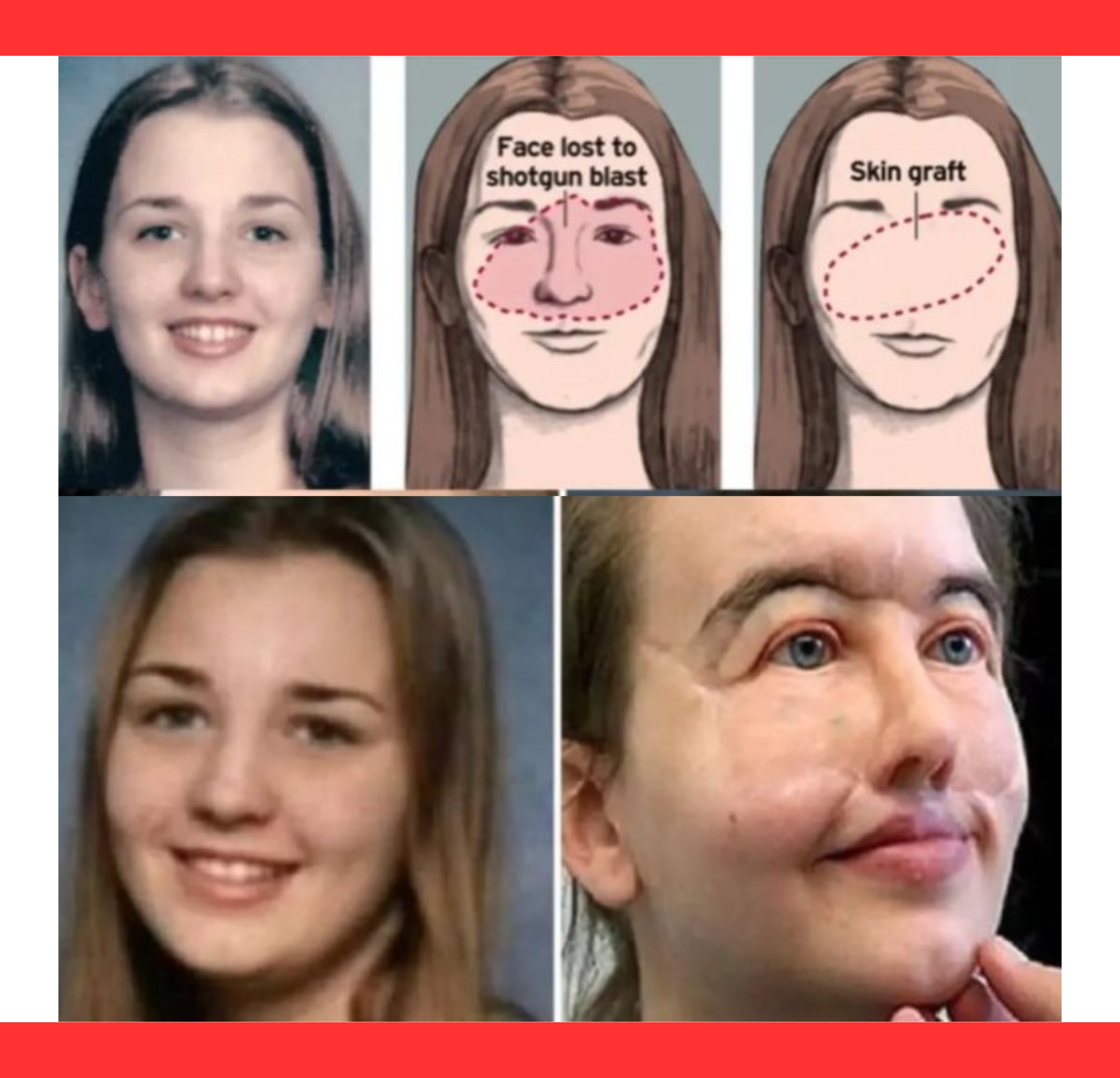
At just 16, an accidental shotgun blast tore away the face she had known, stealing her sight and leaving behind a void that no one believed could be filled again.
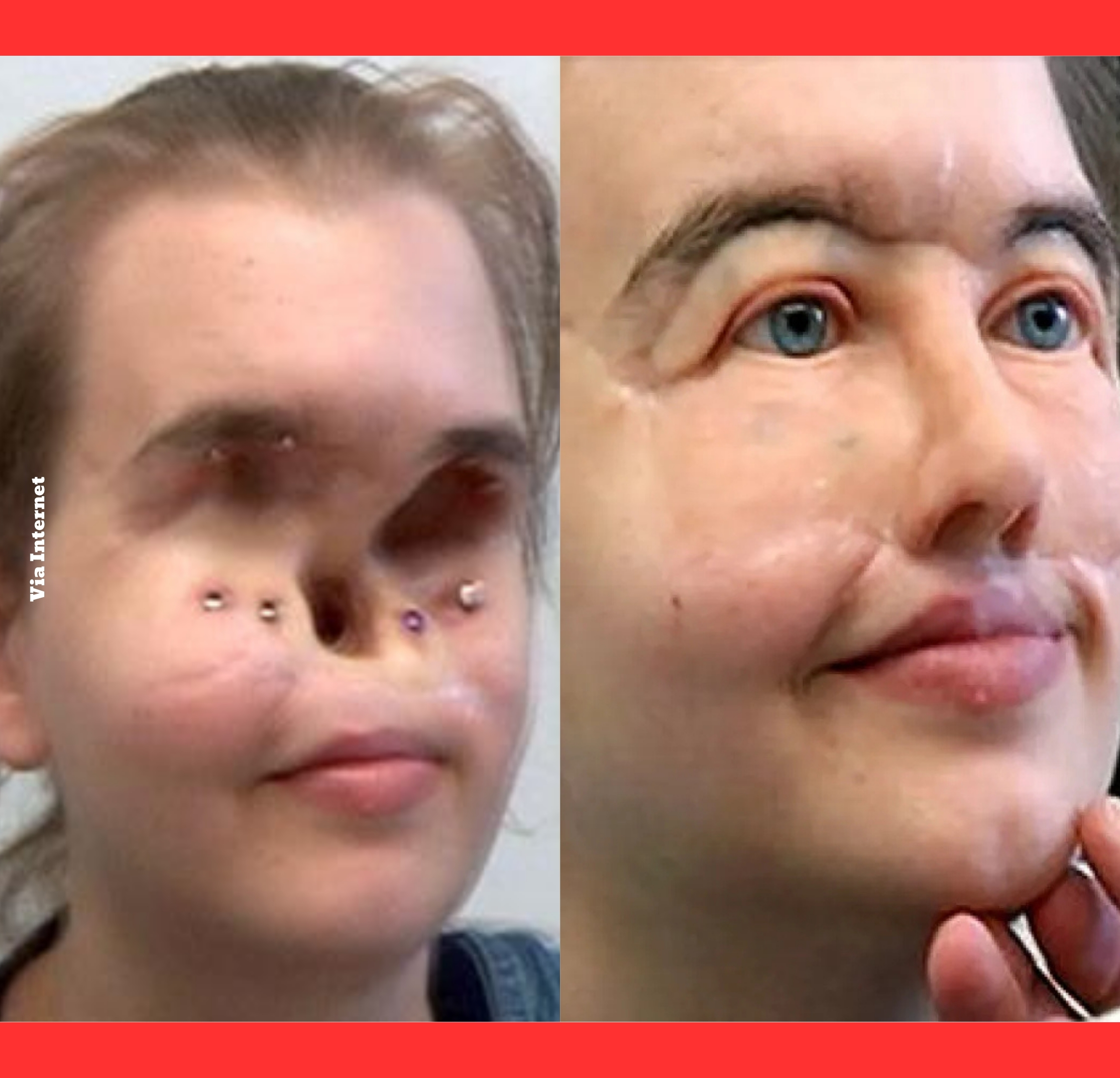
The injury was merciless. It claimed her eyes, nose, and much of her facial structure in an instant, thrusting the Oregon teenager into a world of darkness and endless medical uncertainty.
Yet amid the chaos of emergency rooms and grim prognoses, Chrissy held onto a fierce determination that surprised even her doctors.
Years blurred into a rhythm of adaptation.
She mastered Braille with quiet focus, graduated high school with honors, and stepped into motherhood, refusing to let her blindness define the boundaries of her life.
Still, something deeper called to her: a longing not just to function, but to truly see herself reflected in the world once more.
As medical technology advanced, Chrissy explored options once considered impossible.
Rather than relying on traditional prosthetics, she chose a radical path — a custom facial reconstruction built from her own tissues, minimizing rejection and promising a more natural integration.

Surgeons meticulously harvested bone from her leg to rebuild foundational structure and used her own skin for delicate grafting.
Each step demanded precision, patience, and countless hours of planning to ensure blood vessels would connect properly and the new contours would move with her expressions.
The operating theater became a space of quiet miracles.
Multiple procedures layered tissue upon tissue, sculpting features that honored Chrissy’s original bone structure while embracing the possibilities of modern regenerative techniques.
It was less about cosmetic change and more about restoring dignity.
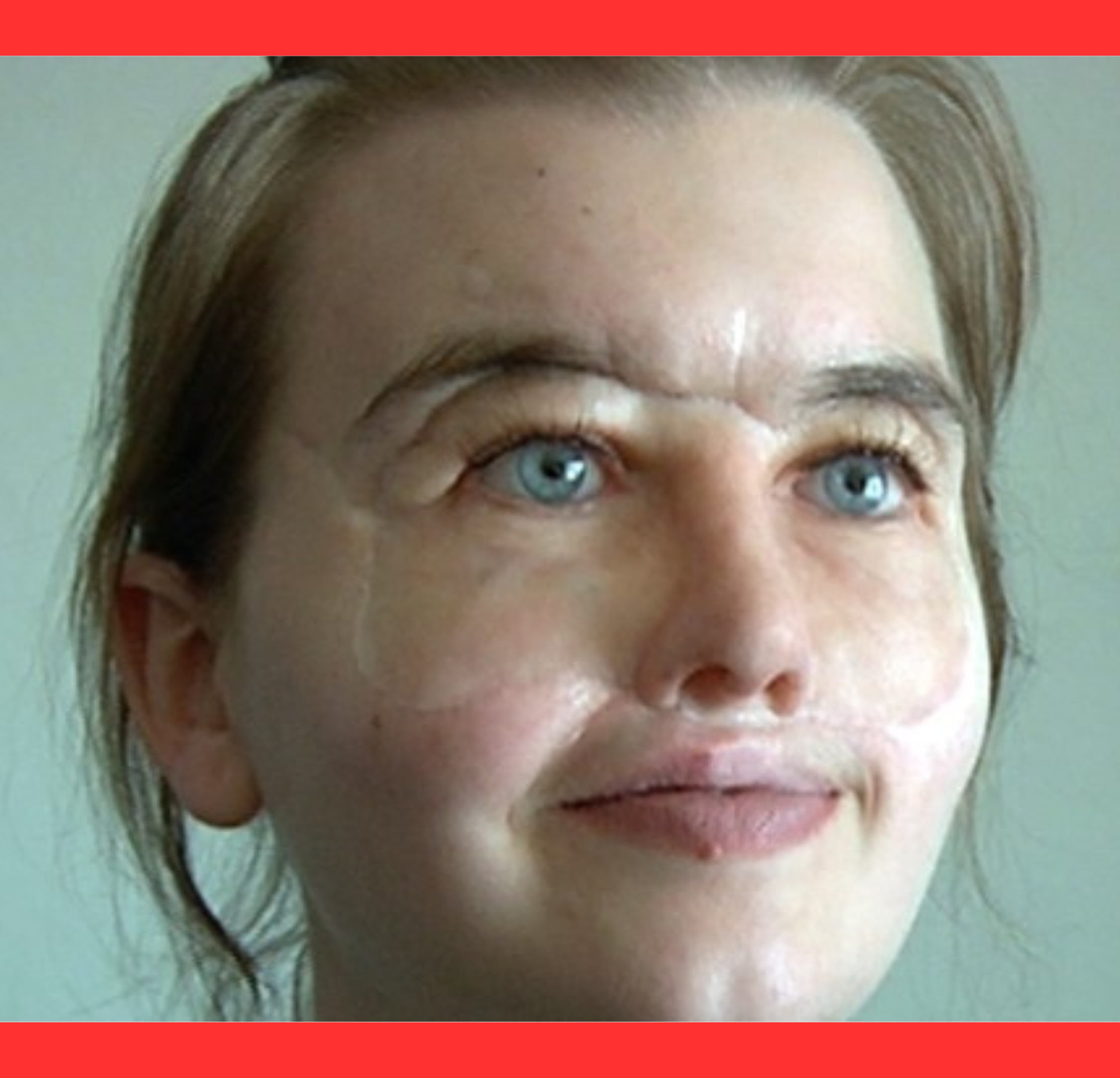
When the final bandages came off, the room filled with held breaths.
For the first time in years, Chrissy could touch a face that felt like her own.
The mirror revealed subtle expressions, familiar cheek lines, and a presence that allowed her to step forward without the weight of constant stares.
Her story ripples beyond personal victory.
Chrissy’s case highlights how autologous tissue engineering — using a patient’s own cells and bone — is shifting the frontier of facial reconstruction, offering trauma survivors pathways once reserved for science fiction.
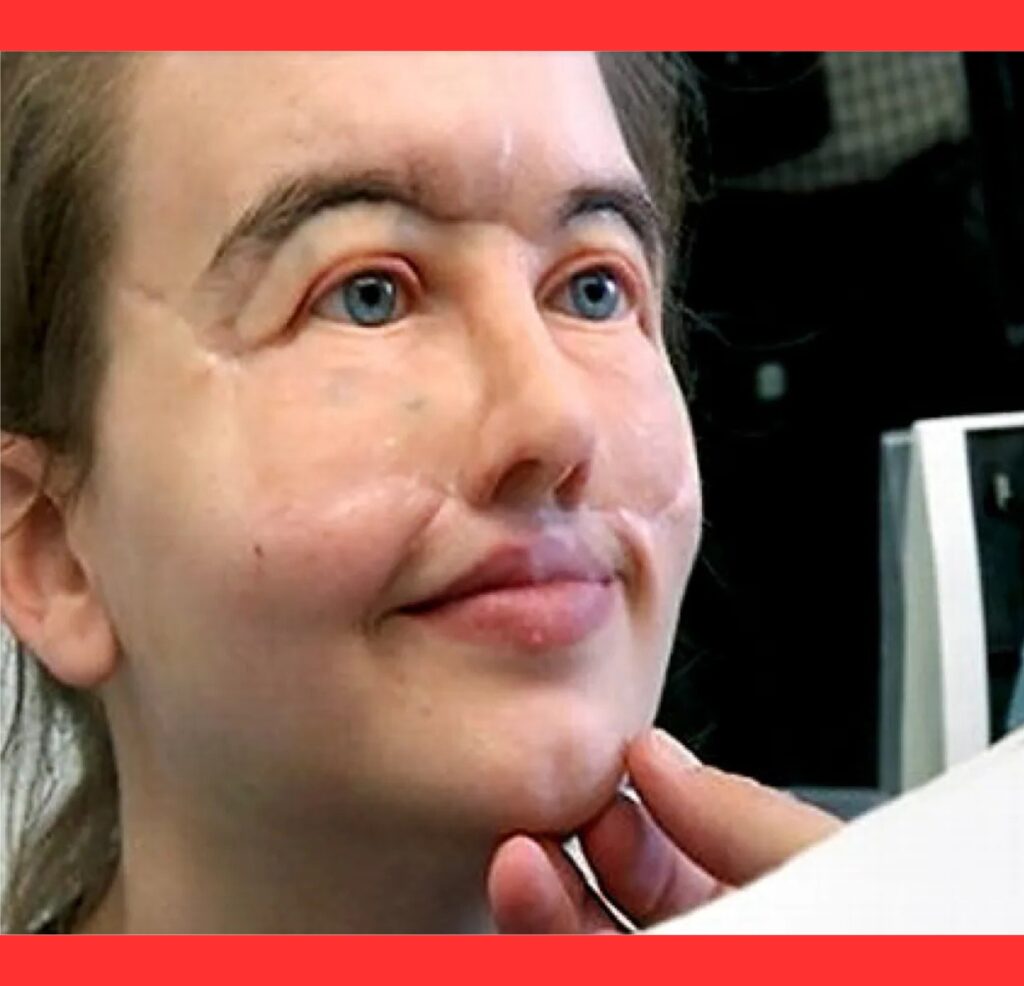
Friends and family describe her transformation as both physical and emotional, noting a renewed confidence in daily interactions and public spaces.
Chrissy herself speaks softly of the experience as a second chance to engage fully with her growing child and the community around her.
Challenges remain, of course.
Adjustments continue, and living with vision loss requires ongoing resilience.
Yet the prosthesis has become more than medical hardware; it is a bridge back to selfhood.
In an era of rapid medical innovation, Chrissy Steltz stands as a testament to human adaptability.
Her journey reminds us that healing often unfolds not in dramatic leaps, but through steady, courageous steps toward reclaiming one’s place in the world.