
Born in Moscow in January 1950, Masha and Dasha Krivoshlyapova were ischiopagus conjoined twins, sharing parts of their lower bodies.
Shortly after delivery, they were taken from their mother, who was informed that her daughters had not survived birth.
Unbeknownst to her, the infants were whisked away for scientific study.

Soviet physiologists at the Pediatric Institute viewed the twins as ideal subjects for research on the interplay between the nervous and cardiovascular systems.
The girls spent their early years isolated in the institute, far from any family affection.
The experiments were nothing short of torturous.
Scientists would pack one twin in ice, lowering her temperature to near-fatal levels, while observing how the shared blood flow affected the other sister.
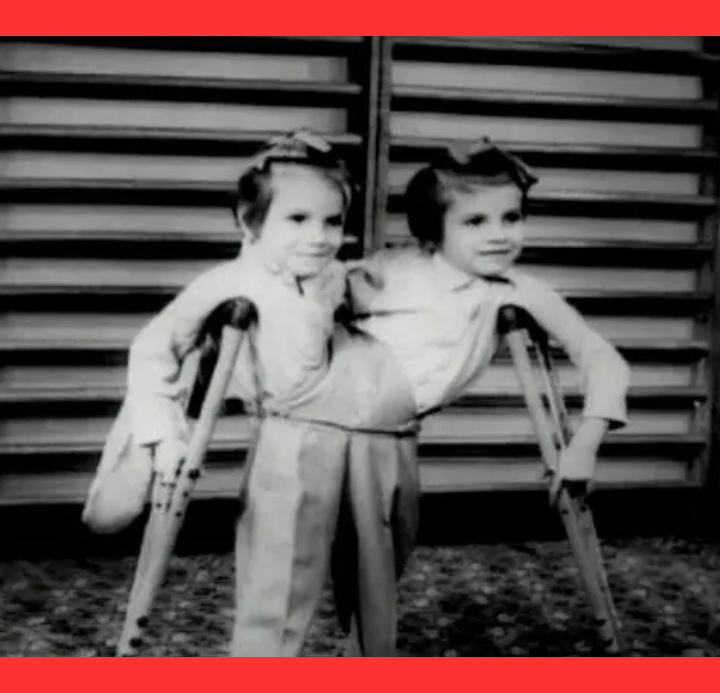
Additional tests included burning their skin, depriving them of sleep for extended periods, starving them, and administering electric shocks synchronized with a metronome to study reflexes.
Radioactive substances were injected into one to track absorption in the other.
These cruel procedures lasted for years, turning the twins’ childhood into a prolonged ordeal of pain and isolation.

Despite everything, Masha and Dasha developed contrasting personalities – one more resilient and the other struggling differently with their shared fate.
As they matured, the twins gained some autonomy, learning to coordinate their movements and even pursuing limited independence.
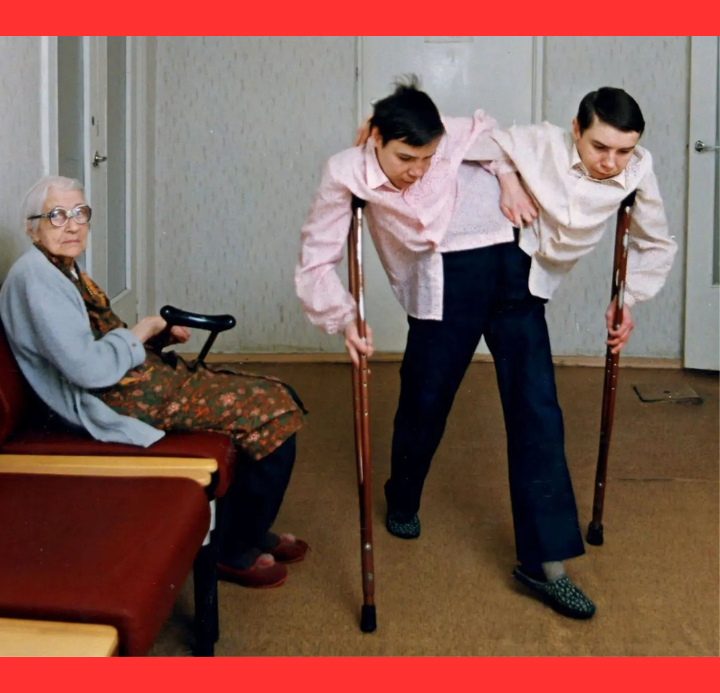
However, the scars of their early life, both physical and psychological, remained with them.
Living in the Soviet Union and later Russia, they faced societal challenges and health complications.
Both battled with alcoholism, a coping mechanism for their extraordinary circumstances.

In April 2003, tragedy struck when Masha fell ill with intense back pain on the 13th.
Her condition deteriorated swiftly over the following hours.
On April 14, Masha suffered a fatal heart attack.
Medical teams intervened, hospitalizing Dasha in hopes of saving her, but the connection proved deadly.

Due to their joined circulatory system, Dasha was exposed to the toxic byproducts released as Masha’s body began to decompose.
She died from severe infection and blood poisoning approximately 17 hours after her sister.

The deaths of Masha and Dasha Krivoshlyapova brought to light one of the most disturbing cases of medical experimentation in history.
Their lives underscore the ethical boundaries that must never be crossed in the name of science, reminding us of the human cost of unchecked research.