
In the early 20th century, psychologist John B. Watson sought to revolutionize the understanding of human behavior through his theory of behaviorism.
Rejecting introspection, he focused solely on observable actions.
His most infamous demonstration came in 1920 with the Little Albert experiment, a study that would later be condemned for its ethical brutality.
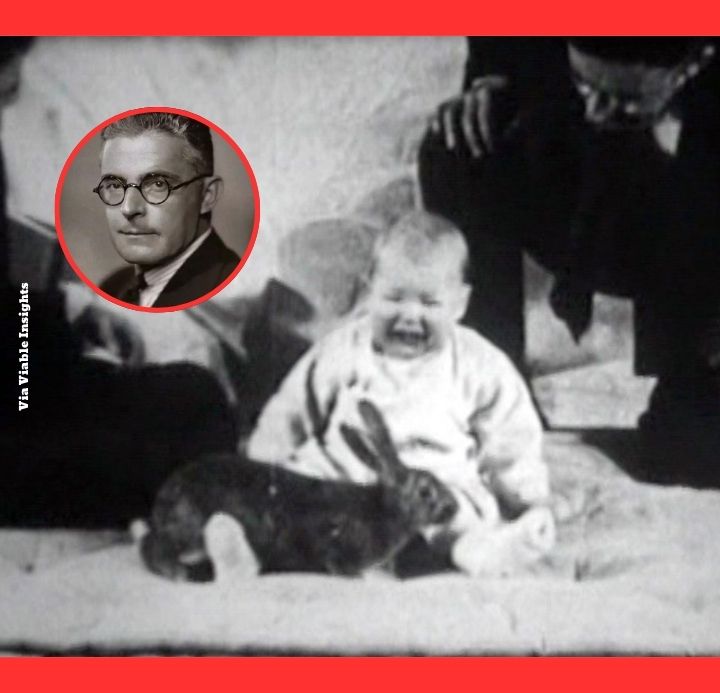
Watson, along with his assistant Rosalie Rayner, selected a nine-month-old infant known as “Little Albert” from the Harriet Lane Home attached to Johns Hopkins University.
The child, believed to be Douglas Merritte or possibly Albert Barger, was described as a healthy, stable baby, though later revelations cast doubt on this.
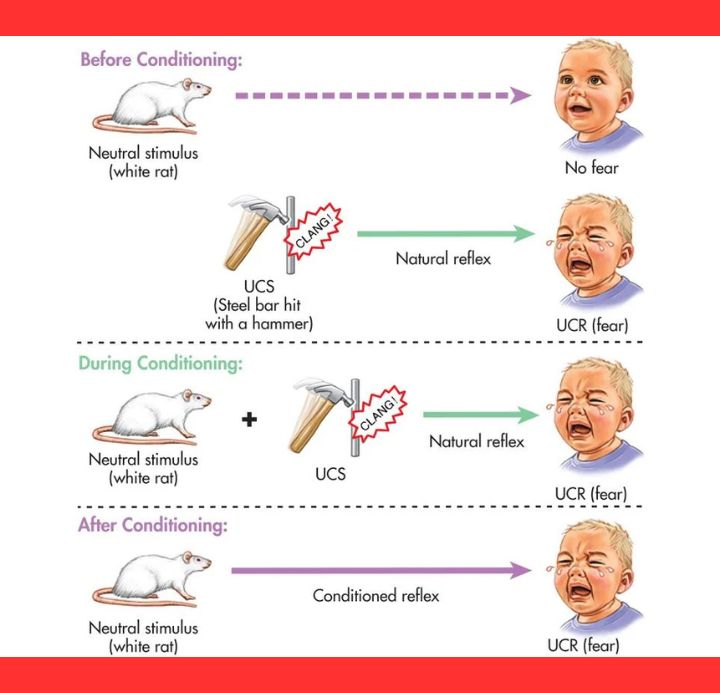
Initially, Albert showed no fear toward a white laboratory rat or other furry objects.
He played with them curiously, reaching out without hesitation.
This neutral response provided the perfect baseline for Watson’s conditioning test, demonstrating classical conditioning principles first observed in Pavlov’s dogs.
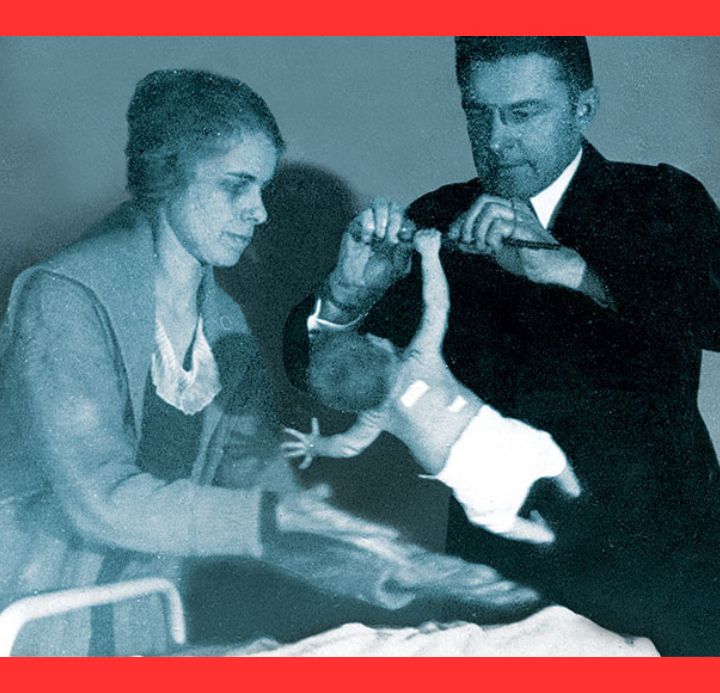
The experimenters introduced a terrifying element: a loud, startling noise created by striking a steel bar with a hammer behind Albert’s head.
Each time the rat appeared, the noise followed, causing the baby to cry and show signs of fear.
Repeated pairings soon linked the innocent animal to the frightening sound.
After several sessions, Little Albert began to fear the white rat even without the noise.
He would cry, crawl away, and attempt to escape whenever the rat approached.
The once playful baby now associated the furry creature with terror, his natural curiosity replaced by dread.
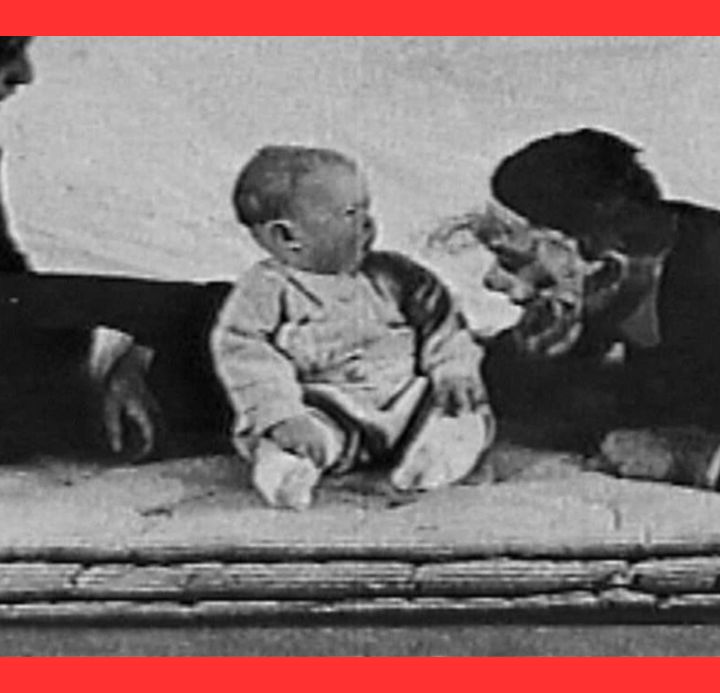
Shockingly, the fear generalized beyond the rat.
Albert developed aversions to rabbits, dogs, fur coats, a Santa Claus mask, and even cotton wool.
This stimulus generalization illustrated how conditioned fears could spread uncontrollably in a child’s mind, robbing him of peace in everyday encounters.
The cruelty extended far beyond the sessions.
Watson and Rayner deliberately induced distress in an infant incapable of consent.
Albert’s mother received minimal information, and the baby endured repeated emotional trauma without regard for his wellbeing.

Most egregiously, no serious attempt was made to reverse the conditioning.
Though they discussed desensitization techniques, the experiment ended abruptly as Albert and his mother left the hospital.
The child was sent back into the world potentially burdened with new phobias.
The long-term fate of Little Albert remains shrouded in mystery.
If he was Douglas Merritte, he tragically died at age six from hydrocephalus, sparing him decades of possible fear but highlighting questions about his initial health.
Regardless, the lack of follow-up meant Watson never checked if the induced fears persisted.
This experiment profoundly influenced psychology, highlighting the power of conditioning but also exposing the need for ethical safeguards.
It contributed to modern standards like informed consent and protection of vulnerable subjects, yet its legacy is one of cautionary tale.
John B. Watson’s ruthless pursuit of scientific proof cruelly robbed Little Albert of the peaceful innocence of infancy.
By engineering fear where none existed, the study not only traumatized a helpless baby but forever stained the field of psychology with its ethical failures.
The baby’s stolen peace serves as a stark reminder of the human cost of unchecked ambition in research.