
On June 10, 1991, eleven-year-old Jaycee Dugard vanished while walking to school in South Lake Tahoe, California. A man in a gray car pulled up beside her on the quiet suburban street, and within seconds she was gone. Her stepfather, who witnessed the abduction from a distance, could only watch helplessly as the vehicle sped away. The case quickly became one of the most haunting missing-child investigations in American history, with nationwide searches, billboards, and media coverage that faded as months turned into years without a trace.
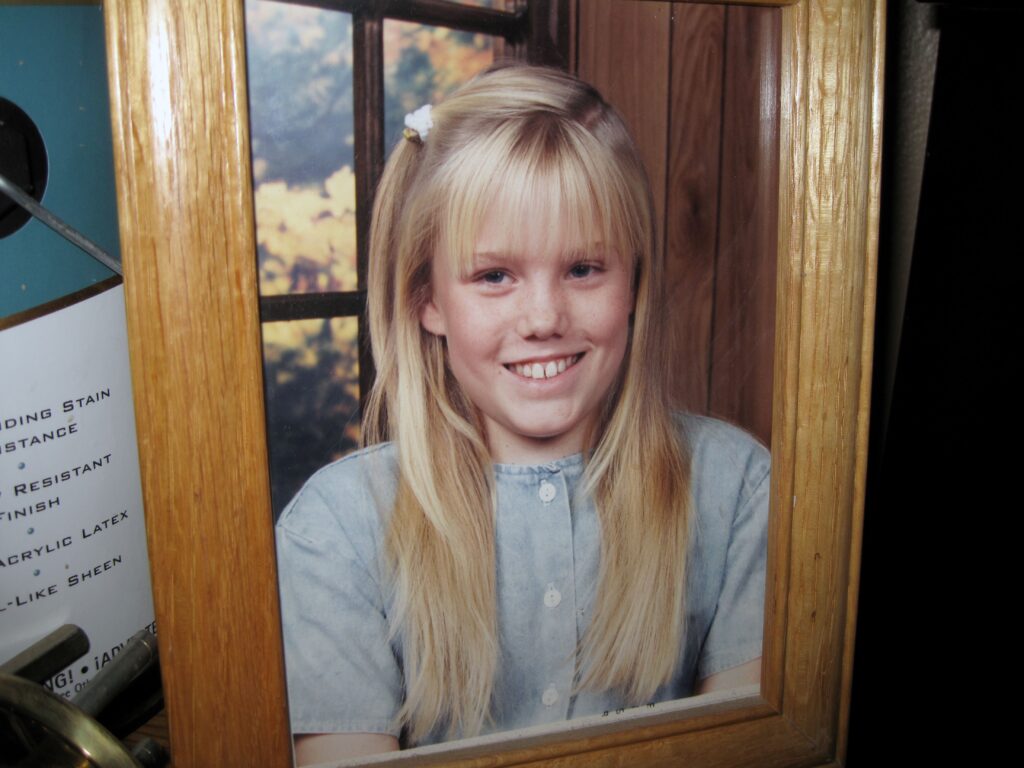
A picture of Jaycee Dugard before she was kidnapped sits framed in her stepfather’s home.
Carey Bodenheimer/CNN/file
Jaycee Lee Dugard was born on May 3, 1980, in Anaheim, California, and had moved with her family to the Lake Tahoe area a few years earlier. Described by those who knew her as a bright, animal-loving girl who enjoyed riding horses and collecting stickers, she was in the fifth grade at the time of her disappearance. Her mother, Terry Probyn, launched an exhaustive campaign to find her, never giving up hope even as leads dried up and the investigation stalled.
The perpetrators were Phillip Garrido, a registered sex offender on parole for a 1976 rape conviction, and his wife, Nancy Garrido. Phillip had a long history of sexual deviance and drug abuse. On the morning of the kidnapping, the couple used a stun gun to subdue Jaycee before bundling her into their car. They drove her roughly two hundred miles west to their home in Antioch, where they had constructed a hidden compound of sheds, tents, and fences in the backyard of Phillip’s mother’s property.

For the first several years, Jaycee lived in a makeshift tent covered by tarps and surrounded by a six-foot fence designed to muffle sound. Phillip controlled every aspect of her existence, subjecting her to repeated sexual assaults while Nancy helped enforce the isolation. Jaycee was renamed “Allissa” and told that law enforcement was searching for her as a runaway. She was forbidden from speaking her real name or contacting the outside world.

By age fourteen, Jaycee gave birth to her first daughter, conceived through repeated rape by Phillip. A second daughter followed in 1997. The young mother raised the girls entirely within the backyard compound, homeschooling them with donated books and creating a fragile sense of normalcy through pets, gardening, and handmade toys. The children grew up believing the tents were their entire universe and that “Papa” and “Mama” were their parents, unaware of their mother’s true identity or the world beyond the fence.

Phillip maintained his grip through a combination of religious delusions, threats, and psychological manipulation. He claimed divine authority and recorded rambling audio sermons that he forced the family to listen to. Electricity was sporadic, and the family relied on a backyard shower and chemical toilet. Despite occasional visits from parole officers, no one ever thoroughly inspected the backyard or questioned the presence of the young girls living there.
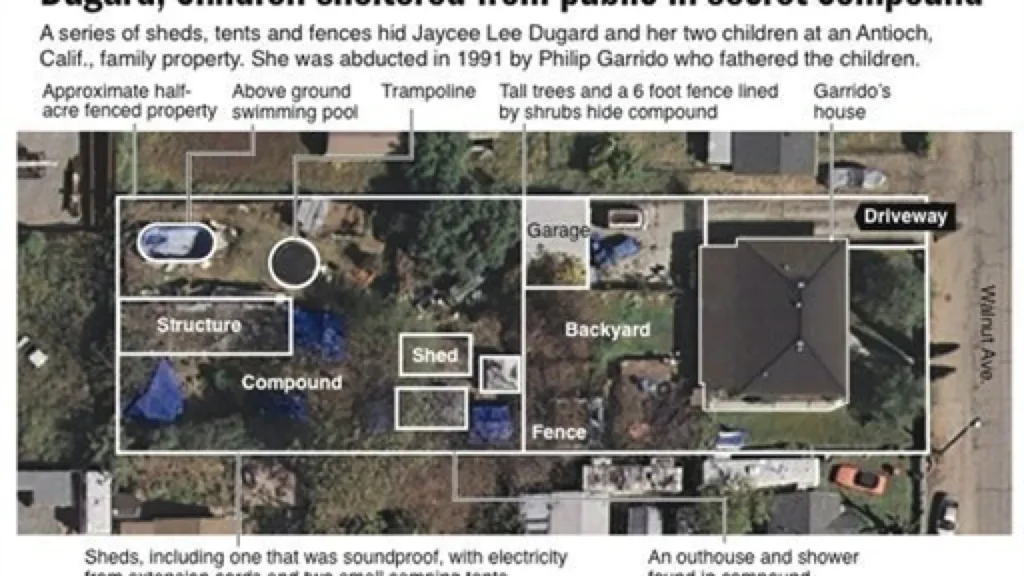
Over the years, several missed opportunities occurred. Neighbors reported suspicions about the strange tents and the sound of children crying, but authorities failed to act decisively. Phillip’s parole agent visited the property multiple times without discovering the hidden living area. Jaycee herself later described feeling invisible to the outside world, trapped in a nightmare that seemed endless.

The breakthrough came in August 2009. Phillip brought his two daughters, then fifteen and twelve, to the University of California, Berkeley campus, where he handed out religious pamphlets. Campus police noticed the girls’ odd behavior and contacted authorities. A parole officer visited the Antioch home, and after questioning, Jaycee finally revealed her true identity during a private interview at the local sheriff’s station. DNA tests confirmed she was the missing girl from 1991.
Jaycee was reunited with her mother after eighteen years of captivity. At twenty-nine years old, she emerged into a world transformed by technology and time. The emotional toll was immense, yet she displayed remarkable resilience. She and her daughters received extensive counseling and support from victim advocates as they adjusted to freedom.
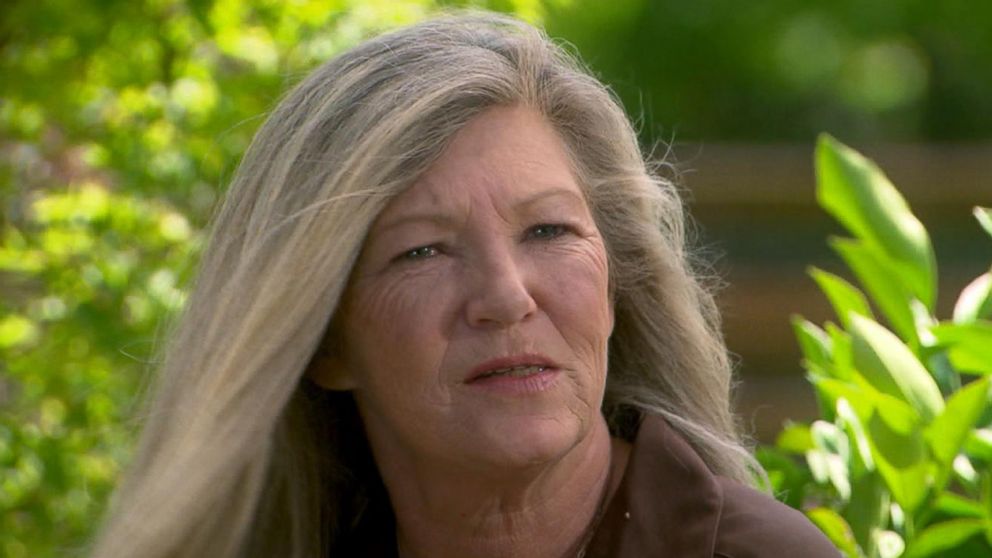
Phillip Garrido pleaded guilty to kidnapping and sexual assault charges and received a sentence of 431 years to life. Nancy Garrido was sentenced to thirty-six years to life for her role in the crimes. The case exposed systemic failures in California’s parole supervision system, prompting legislative reforms to improve monitoring of sex offenders.
Today, Jaycee Dugard lives quietly with her daughters under a new name. She founded the JAYC Foundation to help families of missing children and survivors of abduction. In her memoir “A Stolen Life,” she detailed her experiences with honesty and courage, transforming personal tragedy into a message of hope and healing for others who have endured unimaginable captivity. Her story remains a powerful reminder of both human endurance and the importance of vigilance in protecting the vulnerable.