
Mark Brooks, a 53-year-old fitness enthusiast living in Dubai, thought nothing of the minor scrape on his elbow after an intense training session in a chilly UK gym.
What started as a simple twist during a workout quickly escalated into a life-threatening battle against necrotizing fasciitis, commonly known as flesh-eating bacteria.
Within hours, the infection ravaged his arm, forcing doctors into a desperate race against time to save his life.
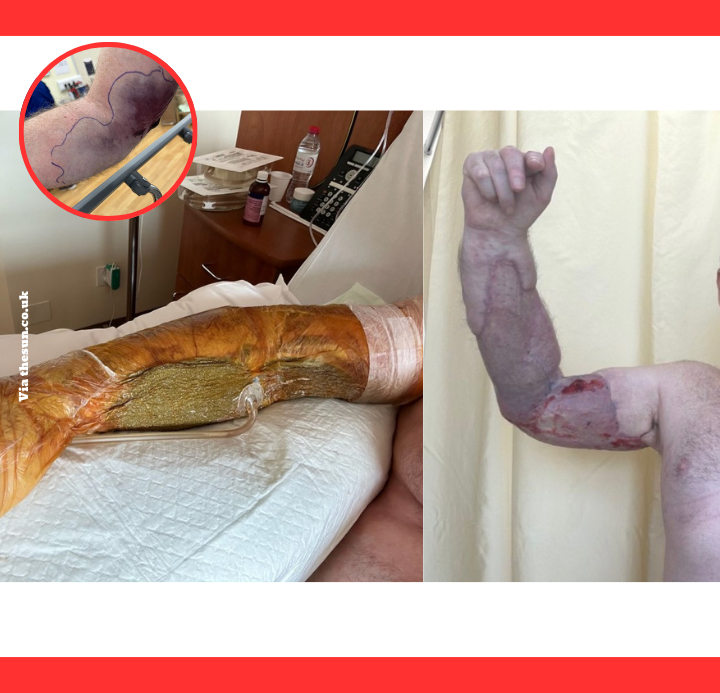
The incident occurred while Brooks was pushing through a rigorous exercise routine.
Already battling a sore throat and feeling under the weather from travel and fasting, he felt a sharp tweak in his elbow but dismissed it as routine strain.
Little did he know that the combination of a small skin break, possible exposure in the gym environment, and his compromised immune state would invite a deadly bacterial invasion.
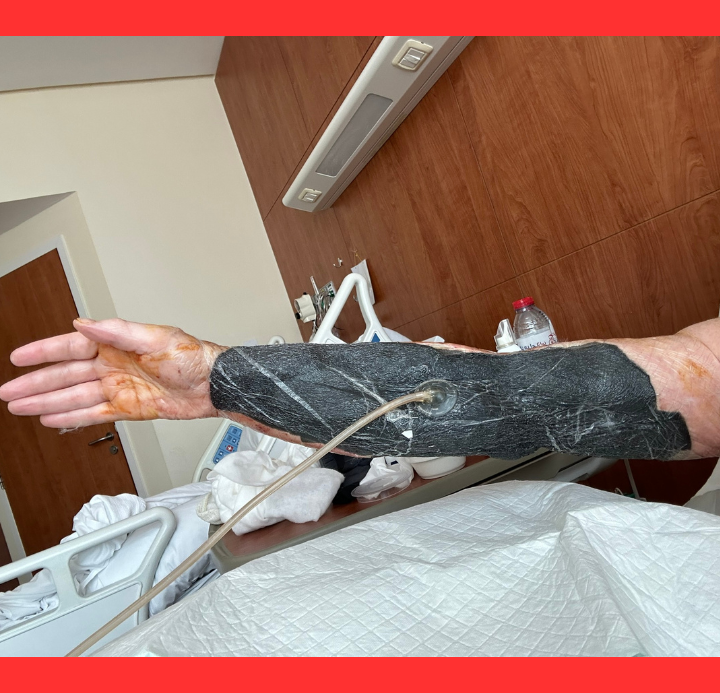
By the next morning, Brooks was in agony. What began as mild swelling and redness exploded into severe pain, fever, and visible tissue damage.
“I thought it was just the flu or food poisoning at first,” he later recounted in interviews.
But the bacteria had already begun consuming muscle and skin at an alarming rate, spreading through his bloodstream and triggering sepsis.
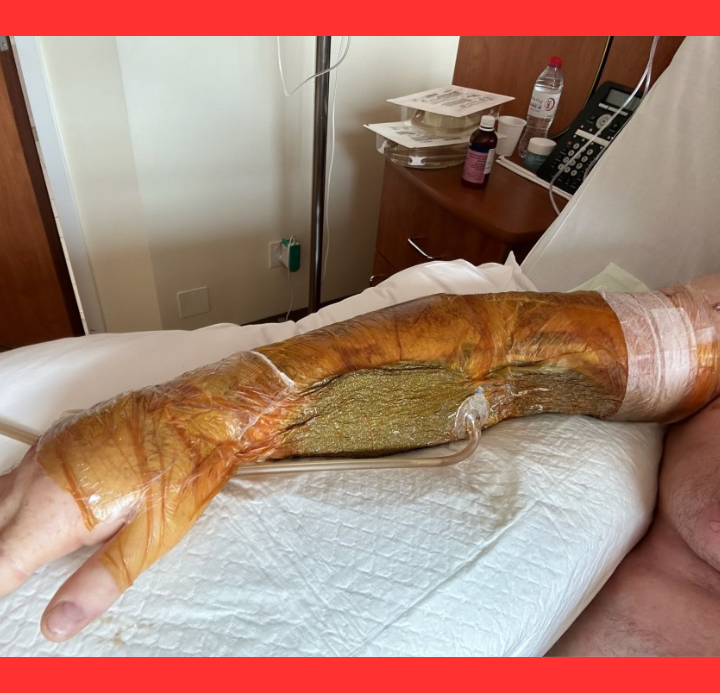
Rushed to a local hospital, doctors diagnosed necrotizing fasciitis almost immediately.
The rare but aggressive infection, often caused by Group A Streptococcus or other bacteria, destroys soft tissue rapidly—sometimes within 24 hours.
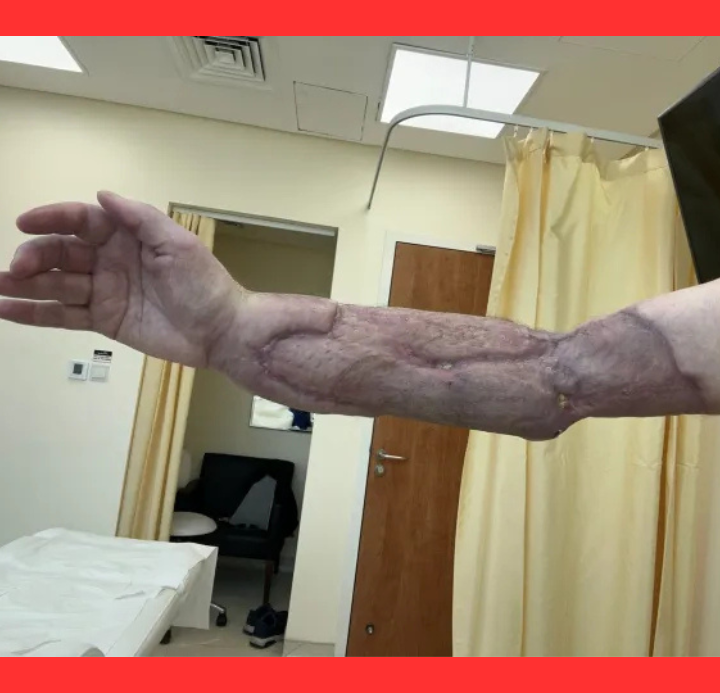
Brooks’ left arm was the primary target, with flesh literally being eaten away, leaving bone exposed in places.
Emergency surgery became the only option.
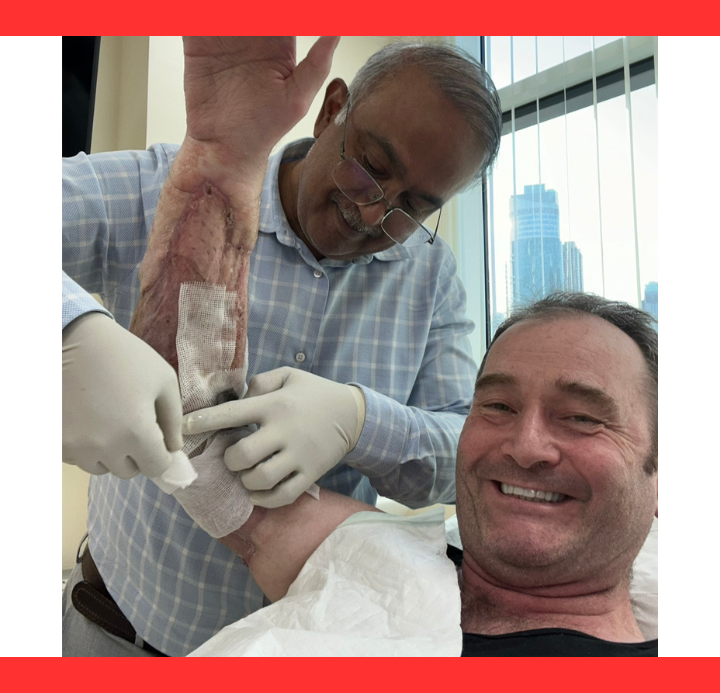
Surgeons performed aggressive debridement, cutting away dead and infected tissue to halt the spread.
Brooks slipped into organ failure as the bacteria overwhelmed his system, requiring intensive care and multiple interventions to stabilize him.
Transferred back to Dubai’s Al Zahra Hospital, Brooks underwent more than 25 operations over the following weeks.
The medical team fought tirelessly to control the infection while managing his critical condition.
Family and friends rallied around him, stunned by how quickly a routine training mishap had turned catastrophic.
Despite the odds—with necrotizing fasciitis carrying a 20% mortality rate—Brooks survived thanks to swift diagnosis and expert care.
His recovery involved reconstructive surgery, including using fat from his abdomen to rebuild damaged arm tissue, restoring some function and appearance.
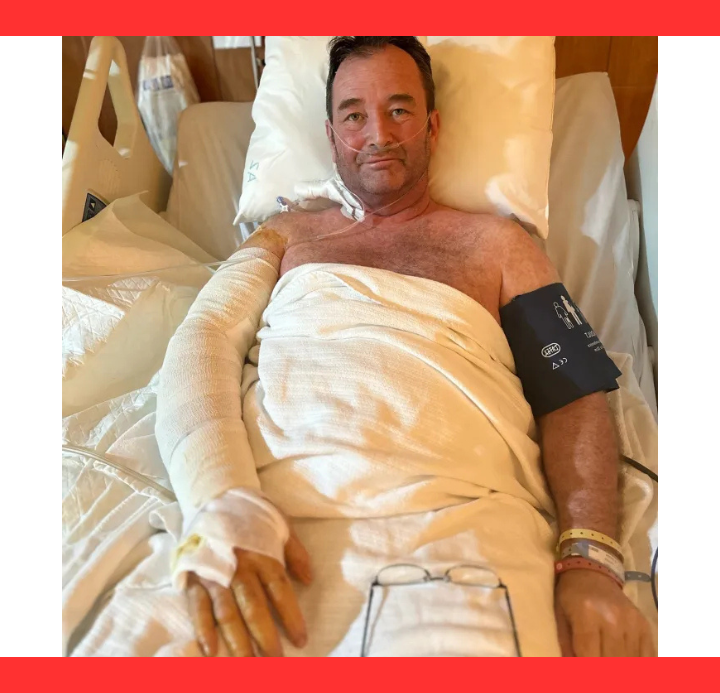
Today, Mark Brooks shares his harrowing story as a survivor and advocate for awareness.
He emphasizes the importance of not ignoring seemingly minor injuries, especially when combined with other symptoms like illness or fatigue.
“Listen to your body,” he urges others.
The case highlights the hidden dangers lurking in everyday activities.
Fitness enthusiasts are reminded that gyms, while beneficial, can harbor bacteria if hygiene slips.
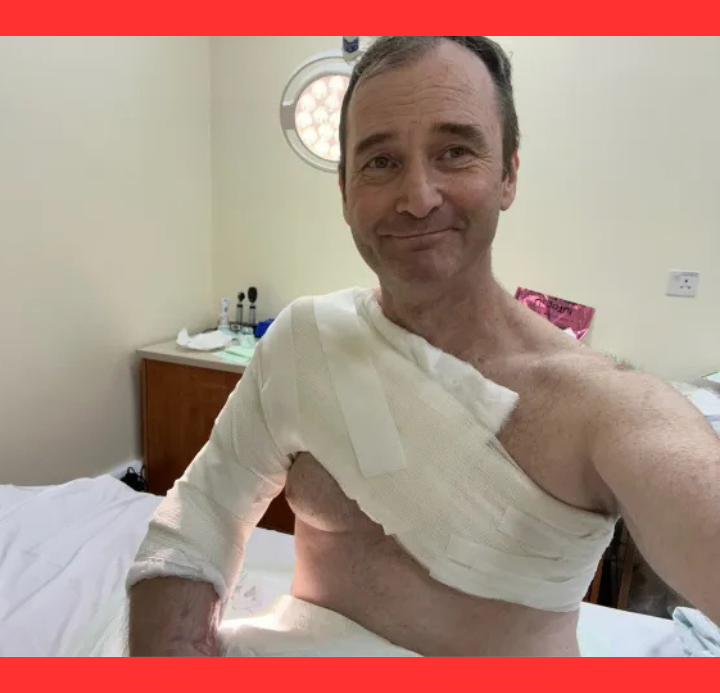
Brooks’ ordeal serves as a stark warning: what seems like a scrape can become deadly without prompt medical attention.
Medical experts note that early symptoms—intense pain disproportionate to the injury, swelling, and fever—demand immediate evaluation.
Antibiotics alone aren’t enough; surgical removal of infected tissue is often critical.
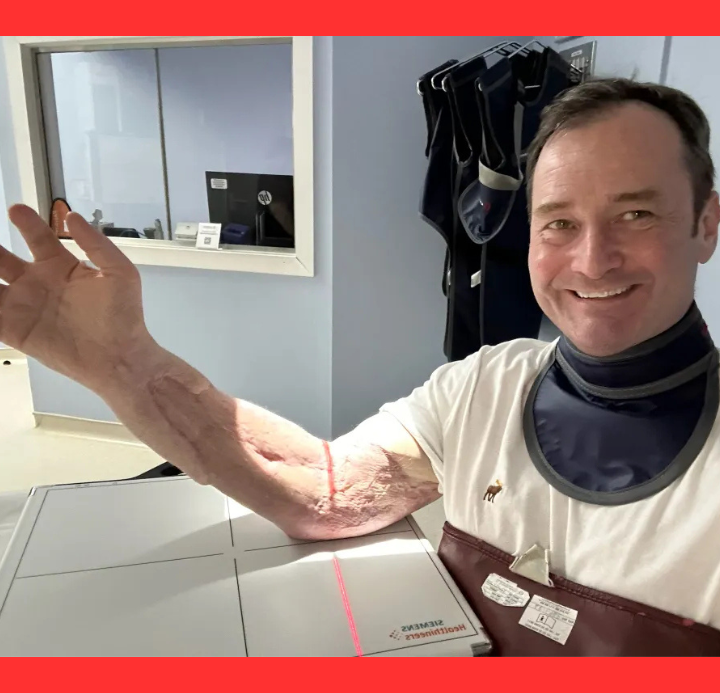
Brooks has since returned to light activity, grateful for his second chance.
His journey from training injury to near-amputation underscores the power of modern medicine and human resilience in the face of one of nature’s most ferocious infections.