
Born on October 10, 1834, in a farming family that later settled in Adams County, Illinois, Rhoda Derry was once a beautiful young woman with a bright future ahead.
The youngest of nine children, she grew up in the rural heartland, enjoying the simple pleasures of 19th-century farm life.

Via Internet
As a teenager, Rhoda fell in love with Charles Phenix, a neighbor.
Their romance blossomed until his mother strongly disapproved and allegedly threatened to cast a curse on the young woman if she did not stay away.
Whether the curse took effect or not remains unknown, but Rhoda’s life changed dramatically from that moment.
Soon after, Rhoda began exhibiting signs of severe mental illness.
She claimed an evil force—possibly the devil or the vengeful mother—was chasing her.
She screamed uncontrollably and believed she was possessed by a demon, a common interpretation in that era for what we now recognize as mental health issues.
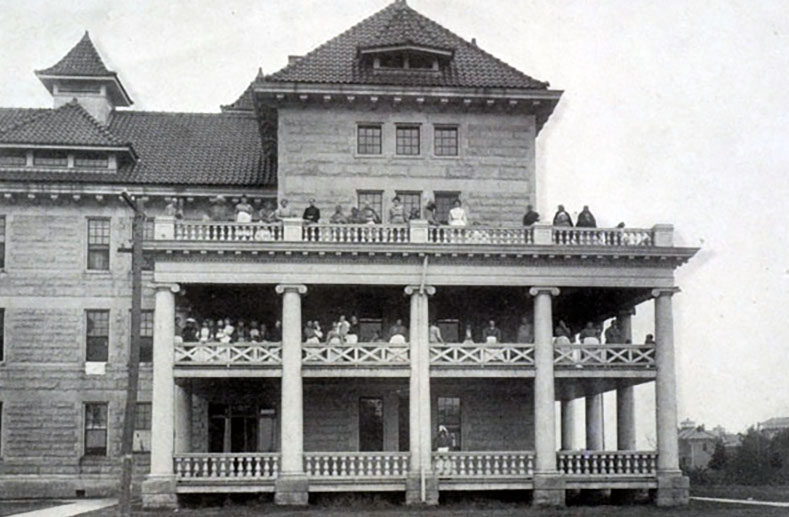
Old Book Ghost of Peoria State Hospital in Bartonville, Illinois | Into Horror History | J.A. Hernandez
In the 1850s, her family, at a loss, committed her to the Jacksonville Insane Asylum.
After a brief stay, she was transferred to the Adams County Almshouse, also known as the poor farm, around 1860.
There, she was labeled incurable and left to languish.
At the almshouse, Rhoda’s conditions were nothing short of horrific.
Deemed too dangerous or disturbed for regular care, she was confined to a small straw basket for years, forced into a perpetual fetal position with her knees drawn up to her chin.

“Rhoda’s Nurses” narration from 2013 documentary, FOR THE INCURABLE INSANE | IMDb
Later, the basket was replaced by a square wooden box on legs, resembling a crude crib or cage known as a Utica crib.
The box had holes for waste to drop through, but it reeked of excrement, and mice and vermin nested beside her in the straw.
She was covered only by a canvas cloth, naked beneath.
Over the decades, Rhoda’s body atrophied from immobility.
Her legs became permanently deformed, and she could neither walk nor communicate effectively. The isolation and torment exacerbated her distress.
In her agony, Rhoda turned to self-mutilation.
She scratched out her own eyes with her long fingernails and repeatedly punched herself in the mouth, knocking out all her teeth.
Bruised and broken, she ate whatever she could grab, including filth.
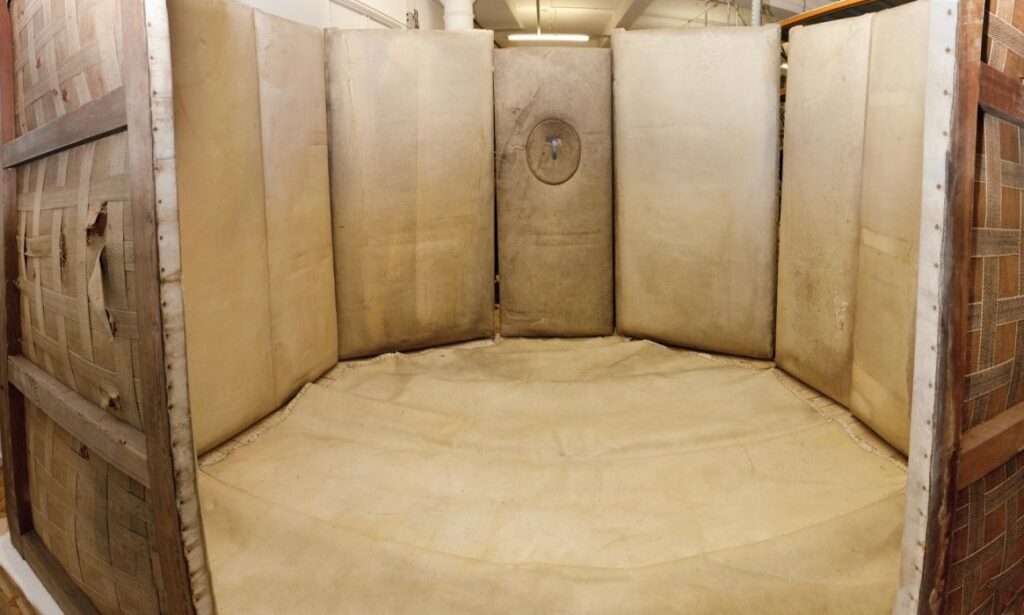
A Victorian Mental Asylum | Science Museum
For 44 long years, from 1860 to 1904, Rhoda endured this nightmare at the almshouse.
Forgotten by society, her case exemplified the era’s brutal and misguided treatment of the mentally ill, often attributed to demonic possession rather than illness.
In 1904, hope arrived when Dr. George Zeller, superintendent of the Illinois Asylum for the Incurable Insane in Bartonville near Peoria, learned of her plight.
He arranged her transfer to his facility, where she received compassionate, humane care for the first time in decades.
Rhoda Derry passed away on October 9, 1906, just one day shy of her 72nd birthday.
Though her final years brought some dignity, her story remains a stark reminder of the need for better mental health understanding and care.
Her grave at the Peoria State Hospital bears witness to a life of unimaginable suffering.