
In the dense forests of Bulandshahr district, Uttar Pradesh, India, in February 1867, a group of hunters tracking game through the winter undergrowth stumbled upon a scene that defied belief.
The British colonial era was full of strange tales from the Indian wilderness, but none quite like this one. What they encountered would later be documented in missionary records and spark debates about human nature that endure to this day.
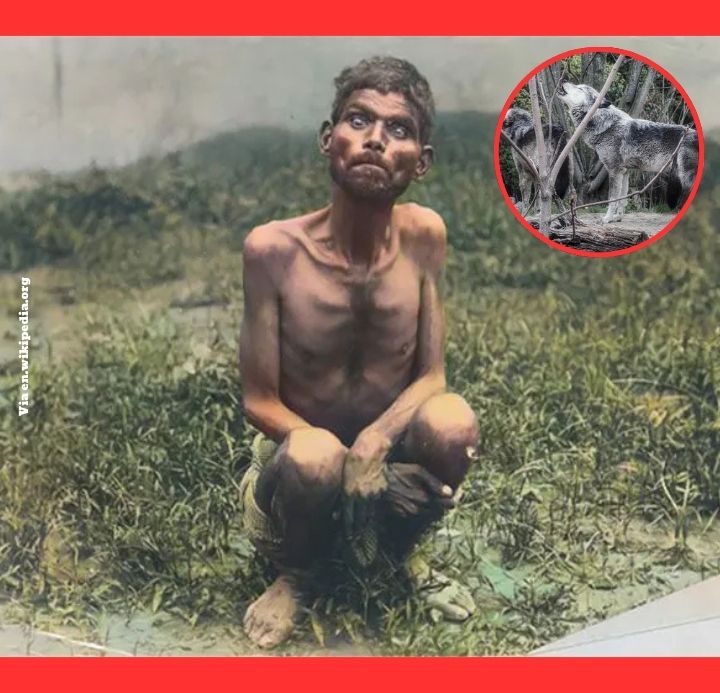
As the hunters moved cautiously through the thick jungle, they spotted a pack of wolves vanishing into the mouth of a hidden cave.
The animals moved with purpose, but something unusual trailed behind them—a small figure scrambling on all fours with surprising speed and grace.
The hunters froze, realizing the “creature” was no animal at all.
To their astonishment, the pack had been sheltering a naked six-year-old boy.
His skin was matted with dirt, his hair wild and unkempt, and his eyes held the wary alertness of a wild animal.
When the wolves retreated deeper into the forest at the approach of humans, the child hesitated, clearly torn between his adoptive family and the strangers

Overcoming their shock, the hunters captured the boy for his own protection.
He resisted fiercely at first, growling and snapping like the wolves he had lived among.
They carried him back to civilization, where word of the discovery quickly reached local authorities.
The child’s presence among the pack suggested he had been raised by them for years, possibly since infancy.
The boy was delivered to William Lowe, the district magistrate and collector, who examined the extraordinary case.
Recognizing that the child needed structured care, Lowe arranged for his immediate transfer to the Sikandra Mission Orphanage in Agra.
There, compassionate missionaries took charge, hoping to gently introduce him to human society.
Because he arrived at the orphanage on a Saturday, the staff named him Dina Sanichar—“Sanichar” meaning Saturday in Hindi.
From his very first days under their roof, his feral origins were unmistakable.
He refused cooked food, preferring raw meat torn with his teeth, and moved exclusively on his hands and feet.
Sanichar communicated not with words but with guttural growls and howls that echoed his wolf pack.
He shied away from human touch and showed no interest in learning speech.
Missionaries noted his remarkable strength and agility, traits honed by years of surviving in the wild alongside the wolves.

Over the following months and years, the orphanage team made patient efforts to civilize him.
They coaxed him into wearing simple clothes and, with time, he learned to stand and walk upright for short periods.
Yet progress remained painfully slow; he never mastered language and continued to exhibit deep behavioral impairments.
Sanichar lived at Sikandra for more than twenty years, forming a rare bond only with another feral child also residing there.
Despite the devoted care, he remained distant from full human connection, a living bridge between two worlds.
His story spread through colonial reports and newspapers, fascinating readers across India and Britain

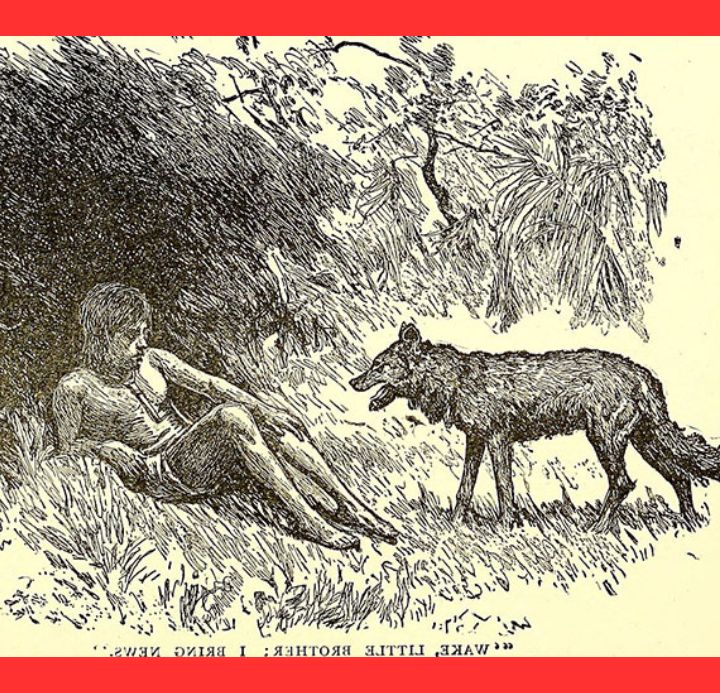
Some historians believe his tale may have inspired Rudyard Kipling’s Mowgli in The Jungle Book, published in 1894—just a year before Sanichar’s death.
Though Kipling never confirmed it, the parallels between the fictional jungle boy and the real “wolf boy” of Bulandshahr were striking and widely noted at the time.
Tragically, Dina Sanichar never fully shed his wild past. He died of tuberculosis in 1895 at approximately 34 or 35 years old, still profoundly shaped by his early life among the wolves.
His remarkable yet heartbreaking story remains one of the most documented cases of a feral child, reminding us of the thin line between civilization and the wild.