
In the crystal-clear waters of North Shore Beach near Port Macquarie, New South Wales, Australian surfer Kai McKenzie lived every wave rider’s worst nightmare on July 23, 2024.
A massive three-metre great white shark struck without warning, severing his right leg above the knee in a single, ferocious bite.
The 23-year-old sponsored athlete, already making waves in competitive circles, fought desperately to stay afloat as blood clouded the ocean around him.

McKenzie’s quick thinking saved his life that fateful morning.
Despite the agony and shock, he paddled furiously toward shore on his board, refusing to surrender to the sea that had just tried to claim him.
Witnesses described the scene as surreal – a young man riding the final wave of his old life, leg missing, determination etched on his face.
Help arrived just in time on the sand.
An off-duty police officer walking his dog improvised a tourniquet using the pet’s leash, stemming the heavy bleeding until paramedics could airlift McKenzie to hospital.
Miraculously, his severed leg washed ashore later that day and was rushed to surgeons on ice, but reattachment proved impossible.

Doctors performed an above-knee amputation, forever altering the young surfer’s body but not his unbreakable spirit.
In the weeks that followed, McKenzie faced intense pain, multiple surgeries, and the daunting prospect of learning to live – and surf – with a prosthetic limb.
Yet even from his hospital bed, he vowed to return to the ocean he loved.
Physical therapy became his new battleground. McKenzie pushed through gruelling rehabilitation sessions, adapting to a high-tech prosthetic designed specifically for wave riding.
Friends, family, and the global surfing community rallied around him, raising funds and sharing messages of support that fuelled his recovery.
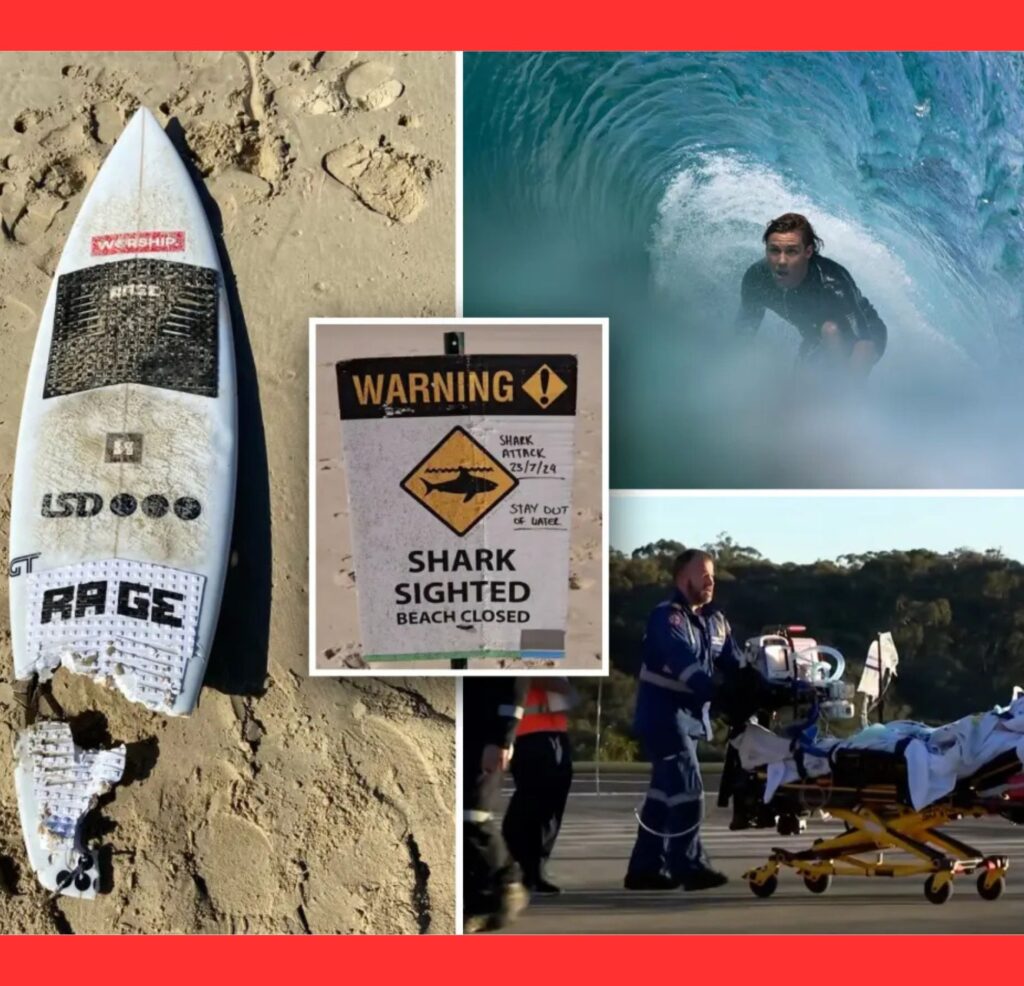
By late 2024, McKenzie stunned onlookers when he paddled out again at the same beach where the attack occurred.
Balancing on one leg, he caught his first post-amputation wave, carving turns with the same grace and power that once defined his style.
Onlookers cheered as he emerged from the surf, prosthetic gleaming under the Australian sun.
The challenges remain formidable. Adjusting to the prosthetic in moving water demands constant recalibration of balance and timing.
McKenzie admits some sessions end in frustration when the board slips or fatigue sets in, but each wipeout only strengthens his resolve.

“I lost my leg, but I didn’t lose surfing,” McKenzie declared in a recent interview, his words now echoing across social media and surfing forums worldwide.
His return has inspired countless athletes facing adversity, proving that passion can triumph over physical limitation.
Surfing organisations have praised McKenzie’s courage, highlighting how his story raises awareness about ocean safety while celebrating the sport’s resilience.
Shark encounters, though rare, continue to spark debate in Australia, yet McKenzie refuses to let fear dominate his life or the waves.

Today, Kai McKenzie surfs regularly, competing in adaptive events and mentoring young riders.
His journey from shark-attack survivor to one-legged wave conqueror stands as a powerful testament to human determination. In defying the dangers of the sea, he reminds us all that the greatest victories often rise from the deepest setbacks.