
In a world where medical marvels continue to astonish, few stories capture the imagination like that of Krista and Tatiana Hogan.
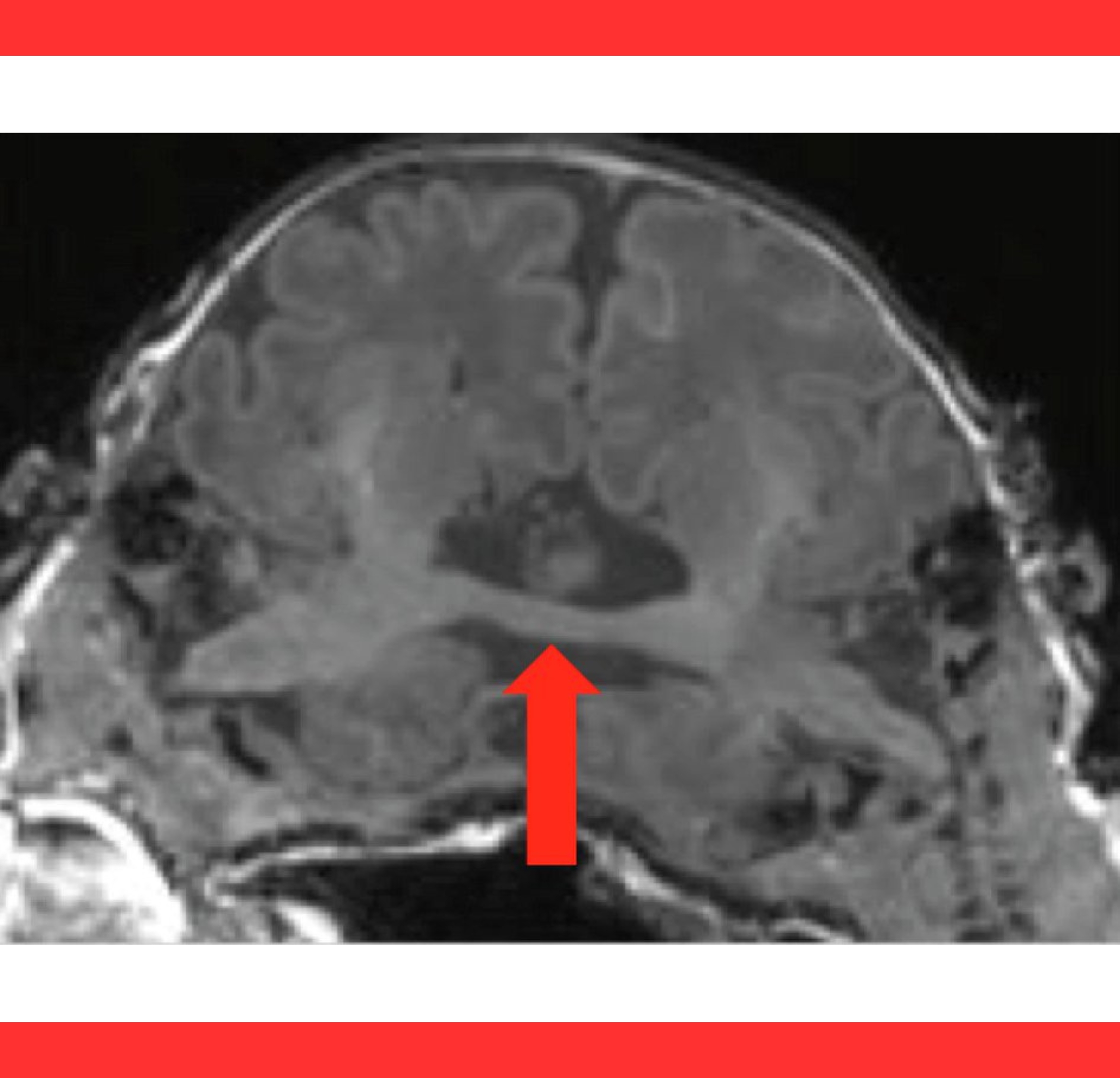
Born on October 25, 2006, in Vancouver, British Columbia, these craniopagus conjoined twins are joined at the head, sharing a single fused skull that houses their two brains connected by a rare thalamic bridge.

This unique anatomical link has defied expectations and offered scientists unprecedented insights into human consciousness.
Doctors initially gave the girls just a 20 percent chance of survival at birth, yet they have thrived into young adulthood, now approaching their 20th birthdays.
Their story challenges traditional notions of individuality and highlights the profound interconnectedness possible between minds.

The thalamic bridge—a thin band of neural tissue linking their thalami—acts like a high-speed data highway.
Each girl possesses her own fully functional brain, but this connector allows sensory information to flow freely between them.
As a result, Krista and Tatiana experience the world in ways that blur the boundaries of self, turning everyday moments into shared adventures.

One of the most remarkable abilities is their capacity to see through each other’s eyes.
Tatiana can peer out from Krista’s visual field, and vice versa, with minimal effort.
Their faces are angled away from one another, yet the bridge compensates, enabling a dual perspective that expands their view of the world beyond what most people could imagine.
Taste is another shared sensation that fascinates observers.
When one twin eats something she loves, the other instantly experiences the flavor.
Family stories abound of Krista grimacing at foods Tatiana adores, or Tatiana reacting with delight to bites only Krista has taken.
This cross-wiring turns mealtimes into synchronized sensory events, strengthening their unbreakable bond.
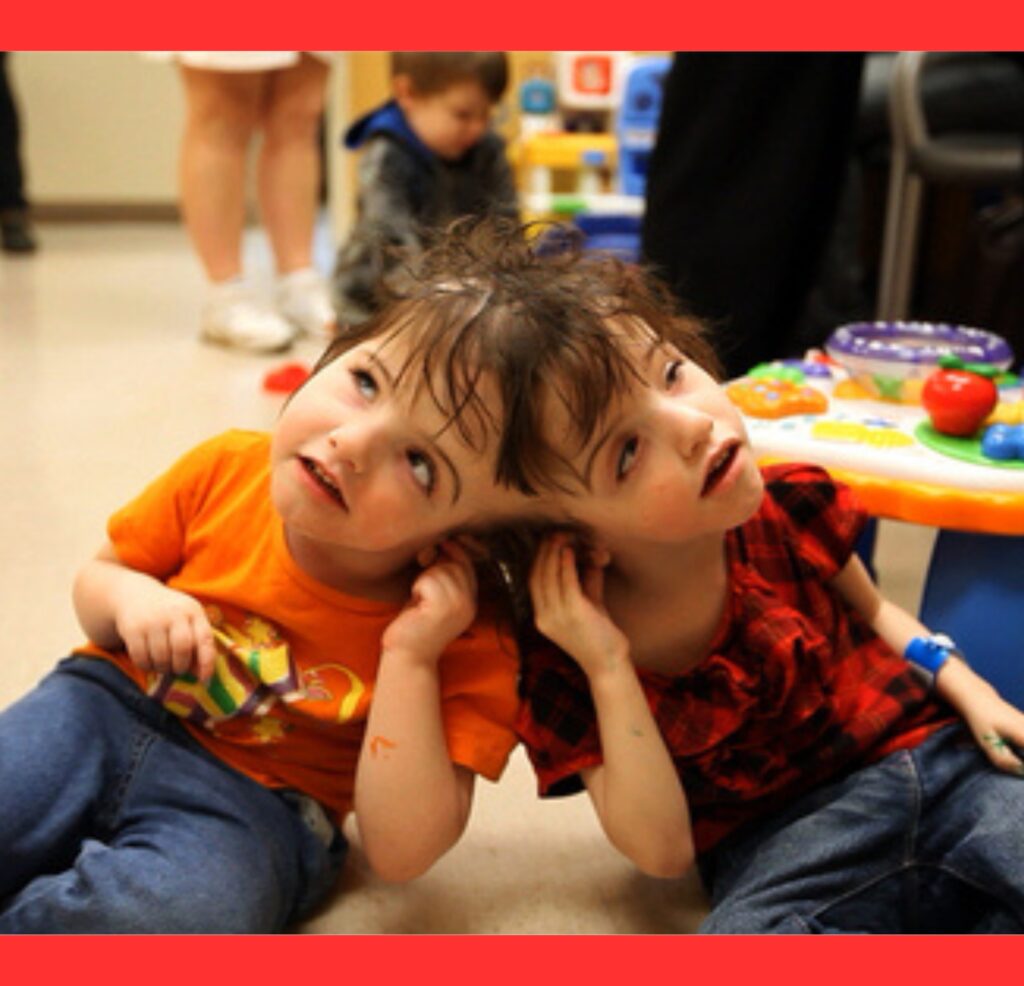
Beyond the physical senses, the twins have developed an intuitive way to communicate without spoken words.
They often finish each other’s sentences or respond to unspoken thoughts, leading experts to speculate on a form of non-verbal “mind talk” facilitated by the neural bridge.
This silent dialogue adds a layer of emotional depth to their relationship, allowing them to console or encourage one another instantly.
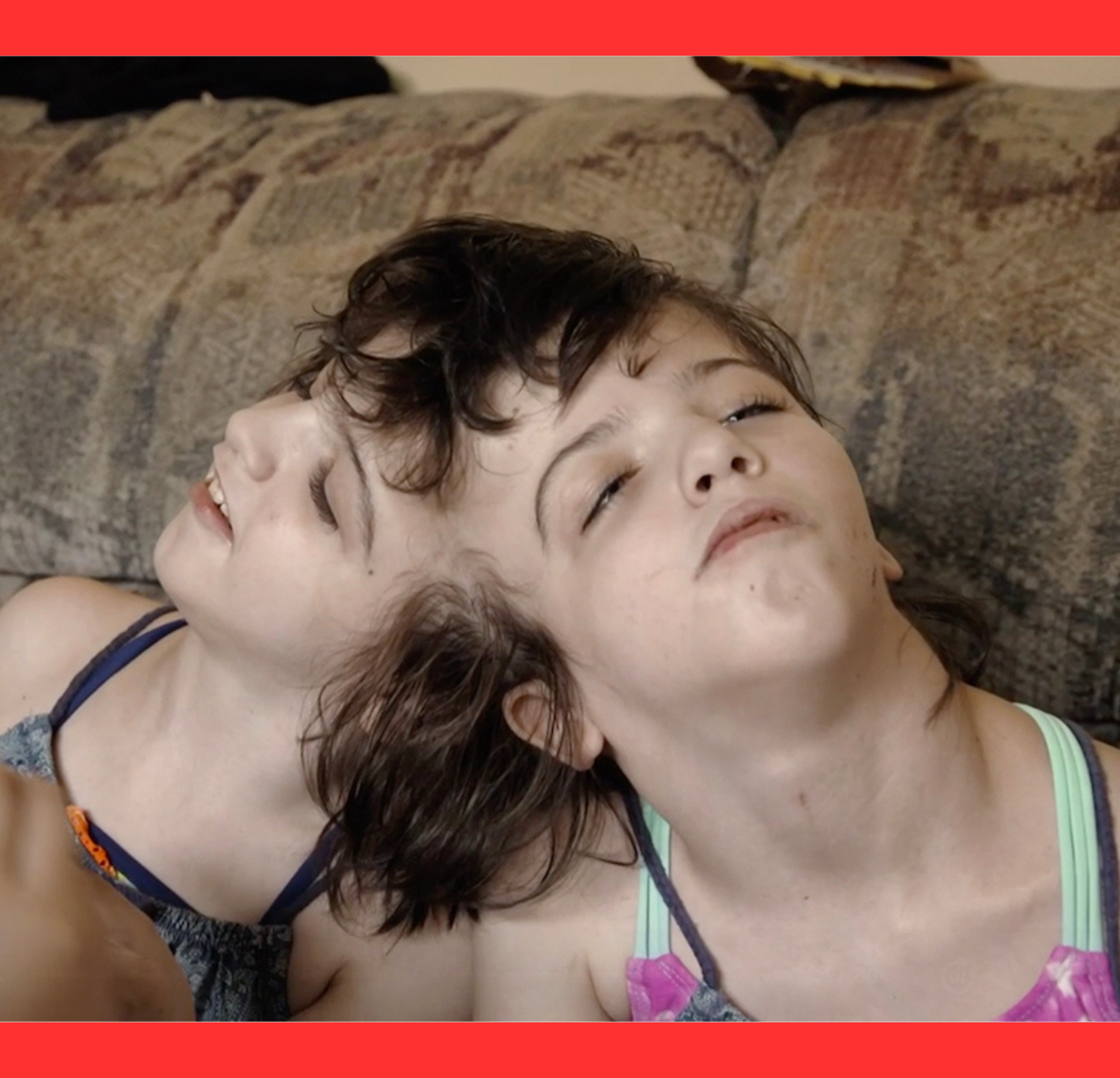
Daily life for Krista and Tatiana resembles that of any close siblings, yet with constant physical and mental proximity.
They play, learn, and explore together, their strong neck muscles adapting to the demands of their joined heads.
Challenges exist, of course—medical monitoring remains essential—but their resilience shines through in every milestone.
Scientists worldwide study the Hogan twins not only for medical knowledge but to probe deeper philosophical questions about the nature of the self.
The thalamic bridge suggests that consciousness may not be as isolated as once thought, potentially opening doors to future treatments for neurological conditions or even brain-computer interfaces.
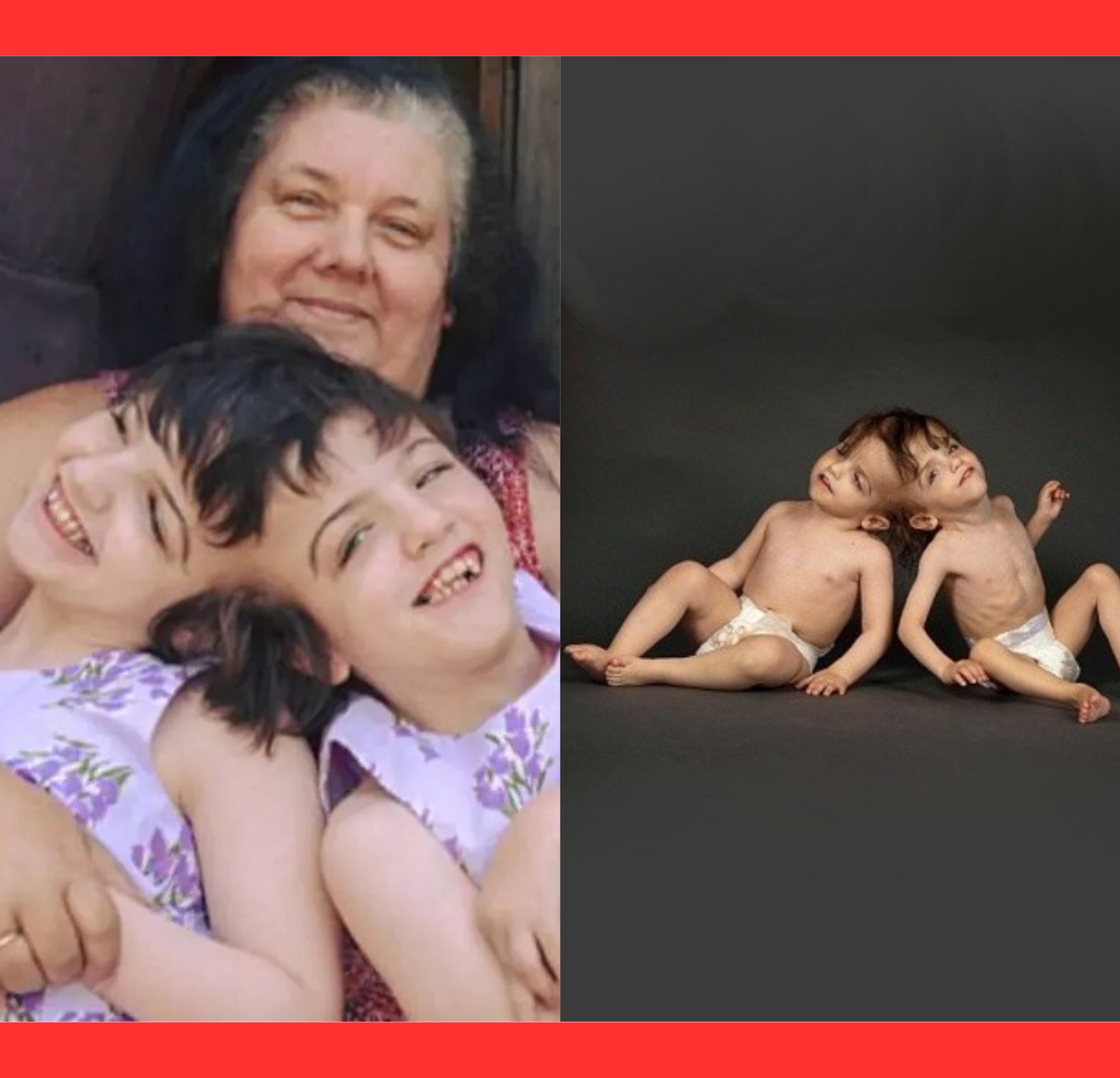
Their family, led by devoted parents, embraces the uniqueness with love and normalcy.
“God made it so they would never have to be alone,” their mother has said, a sentiment echoed in the twins’ joyful personalities.
Public appearances and documentaries have shared their journey, inspiring millions with tales of courage and unity.
As Krista and Tatiana continue to grow, their story serves as a beacon of human adaptability.
In an era of advancing neuroscience, they remind us that the brain’s plasticity holds endless possibilities for connection.
Ultimately, the Hogan twins exemplify that true bonds transcend the physical.
Their shared eyes, tastes, and thoughts paint a vivid picture of empathy made literal, proving that some connections are destined to be extraordinary.