
In the frigid laboratories of post-war Moscow, Soviet surgeon Vladimir Demikhov pushed the boundaries of medical science.
A pioneer in organ transplantation, Demikhov had already achieved breakthroughs like the first experimental coronary bypass and lung transplants in dogs by the early 1950s.
His work aimed to prove that complex organs could be moved between bodies, laying groundwork for future human surgeries.
Yet nothing prepared the world for his most audacious creation in February 1954: a living, two-headed dog.
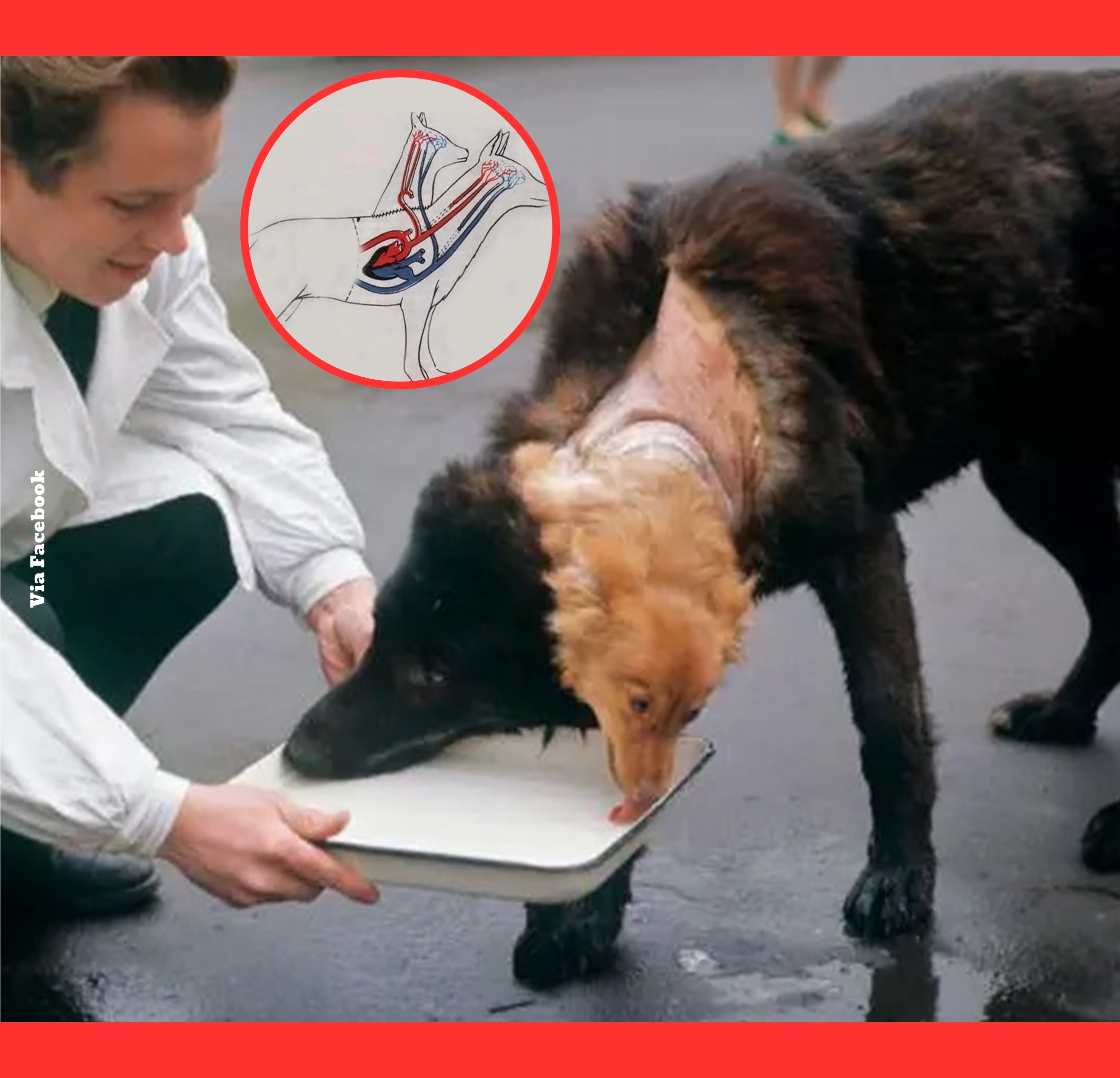
Demikhov’s motivation stemmed from a quest to conquer organ rejection and master vascular connections.
He believed grafting entire sections of one animal onto another would reveal how blood supply and nerves could sustain transplanted tissues.
At the time, transplant surgery was in its infancy, with rejection a massive hurdle.
Demikhov saw dogs as ideal subjects due to their size and resilience, conducting over 20 such experiments throughout his career.
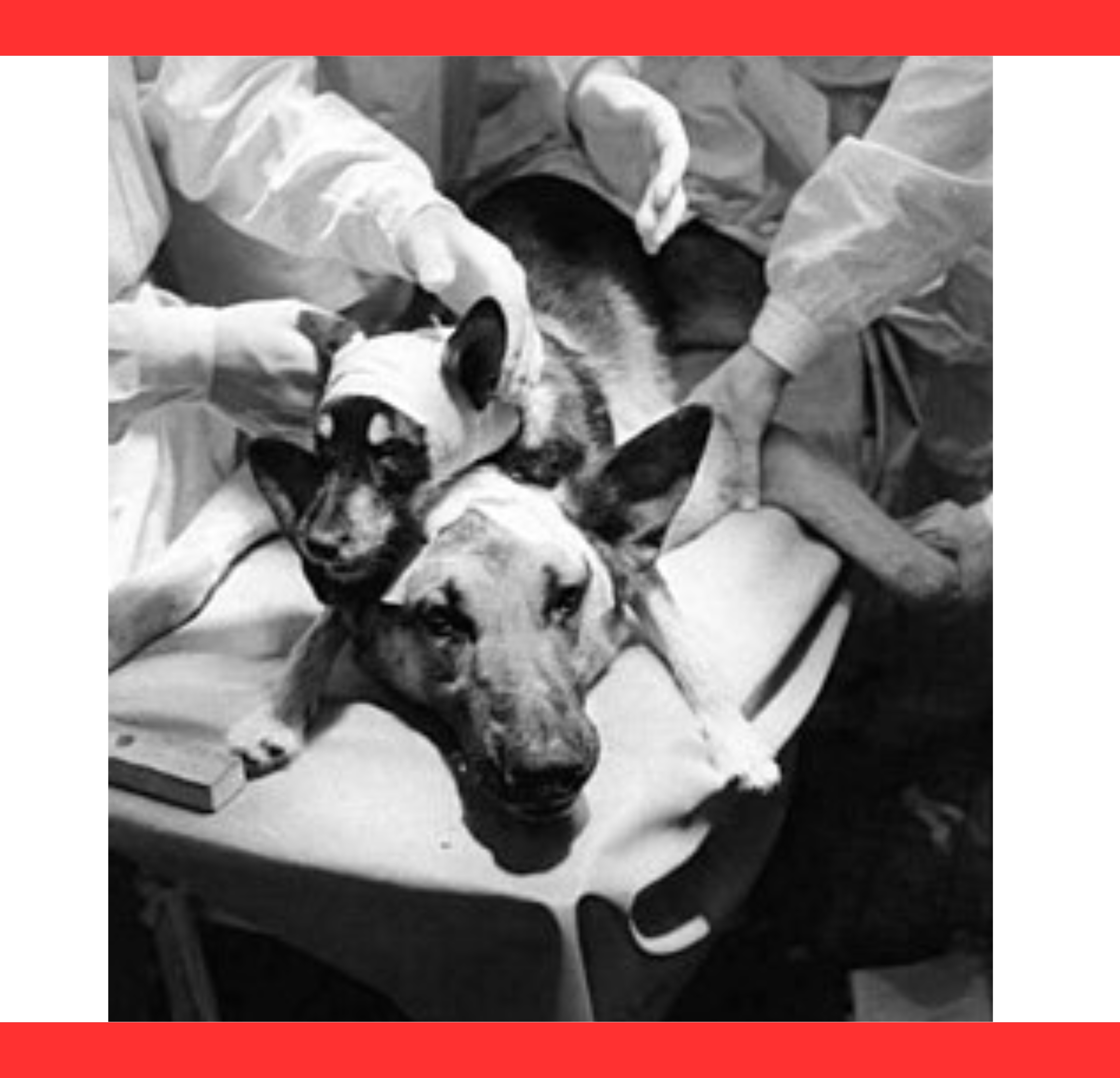
For this landmark procedure, Demikhov selected two strays: a large German Shepherd named Brodyaga and a smaller puppy called Shavka.
The larger dog would serve as the host body, providing circulation and vital organs.
The puppy’s head and forequarters—including shoulders and front legs—would be grafted onto Brodyaga’s neck.
This heterotopic graft tested whether one heart could pump blood for two heads without fatal complications.
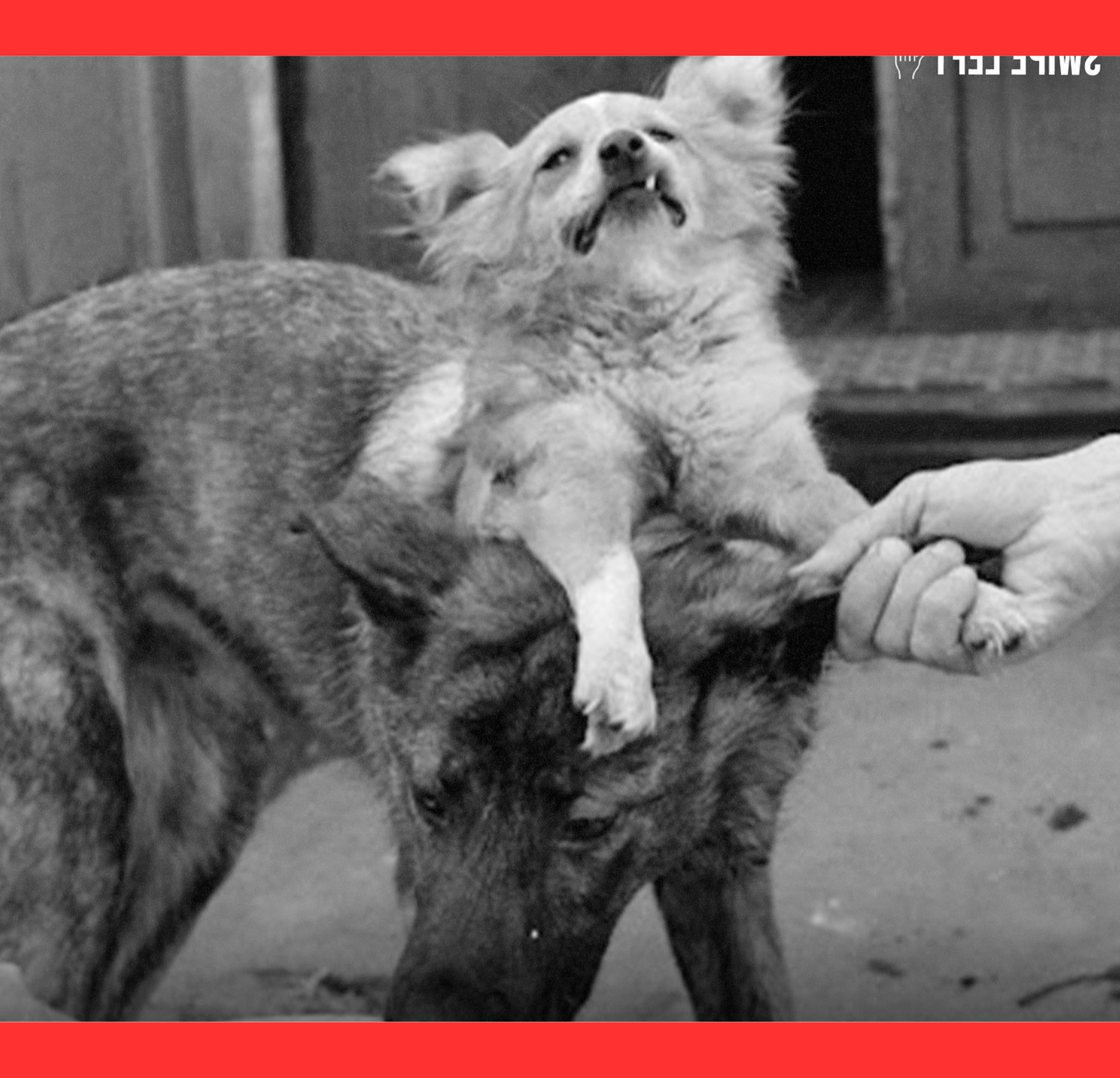
Preparation began under anesthesia in a sterile operating theater. Both animals were shaved and prepped at the surgical sites.
Demikhov and his team carefully incised Brodyaga’s neck, exposing the jugular vein, carotid artery, and cervical vertebrae while preserving the host’s spinal cord and main blood flow.
Simultaneously, they bisected Shavka’s torso midway, severing it cleanly to isolate the upper body for attachment.
The intricate grafting followed. Surgeons connected Shavka’s carotid arteries and jugular veins to Brodyaga’s corresponding vessels, ensuring immediate blood circulation to the puppy’s head.
Muscles and skin were sutured layer by layer around the attachment point, creating a seamless yet grotesque union.
The puppy’s front legs dangled freely, twitching as nerves integrated. The entire operation demanded precision to avoid hemorrhage or shock.
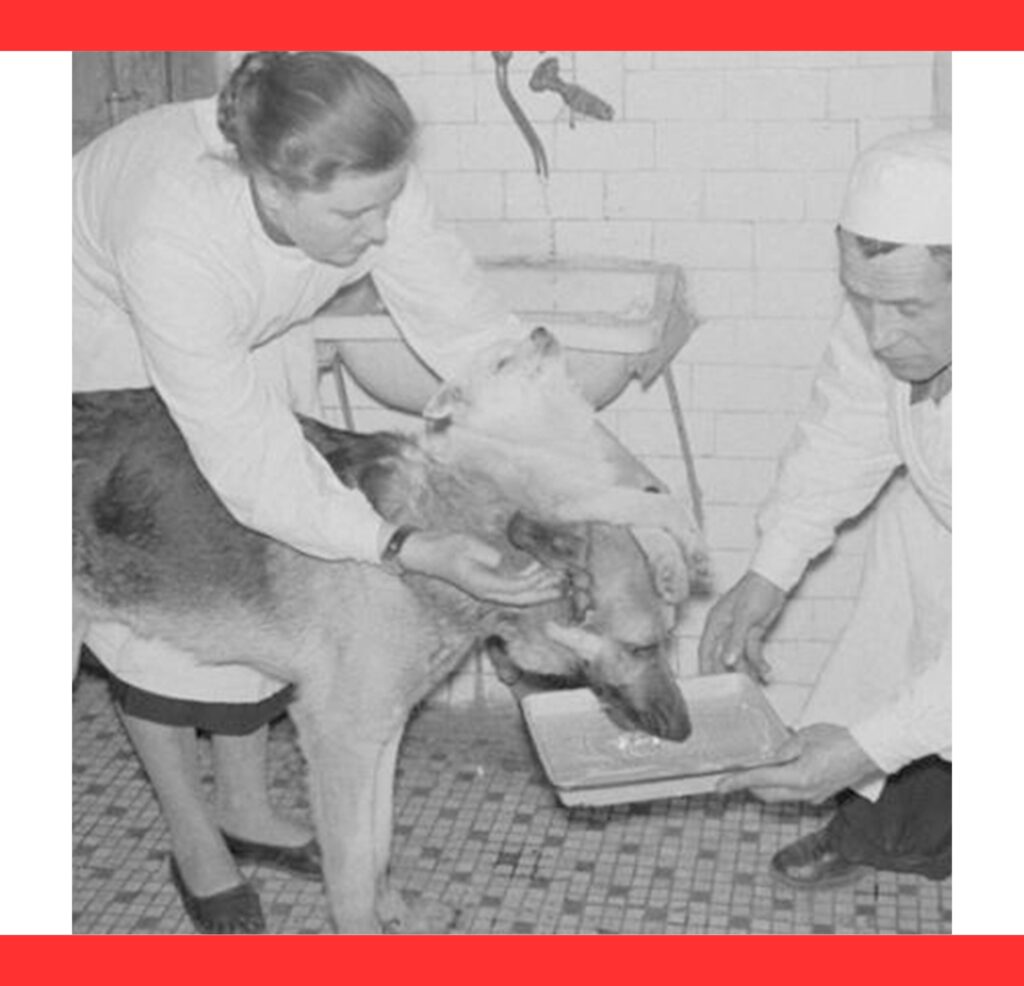
When the anesthesia wore off, both heads regained consciousness almost simultaneously.
The larger dog’s original head lifted first, alert and responsive. Moments later, Shavka’s smaller head yawned and blinked, its eyes focusing independently.
Observers noted both animals could hear, smell, and react to stimuli separately, creating an eerie display of dual awareness.
Daily life for the two-headed dog was a medical marvel and ethical quandary. Demikhov fed each head from separate bowls; the puppy’s head often snapped playfully at the larger one.
The creature walked awkwardly, with the grafted forelegs sometimes interfering with movement.
Scientists monitored vital signs around the clock, documenting how the shared bloodstream sustained both brains without immediate rejection.
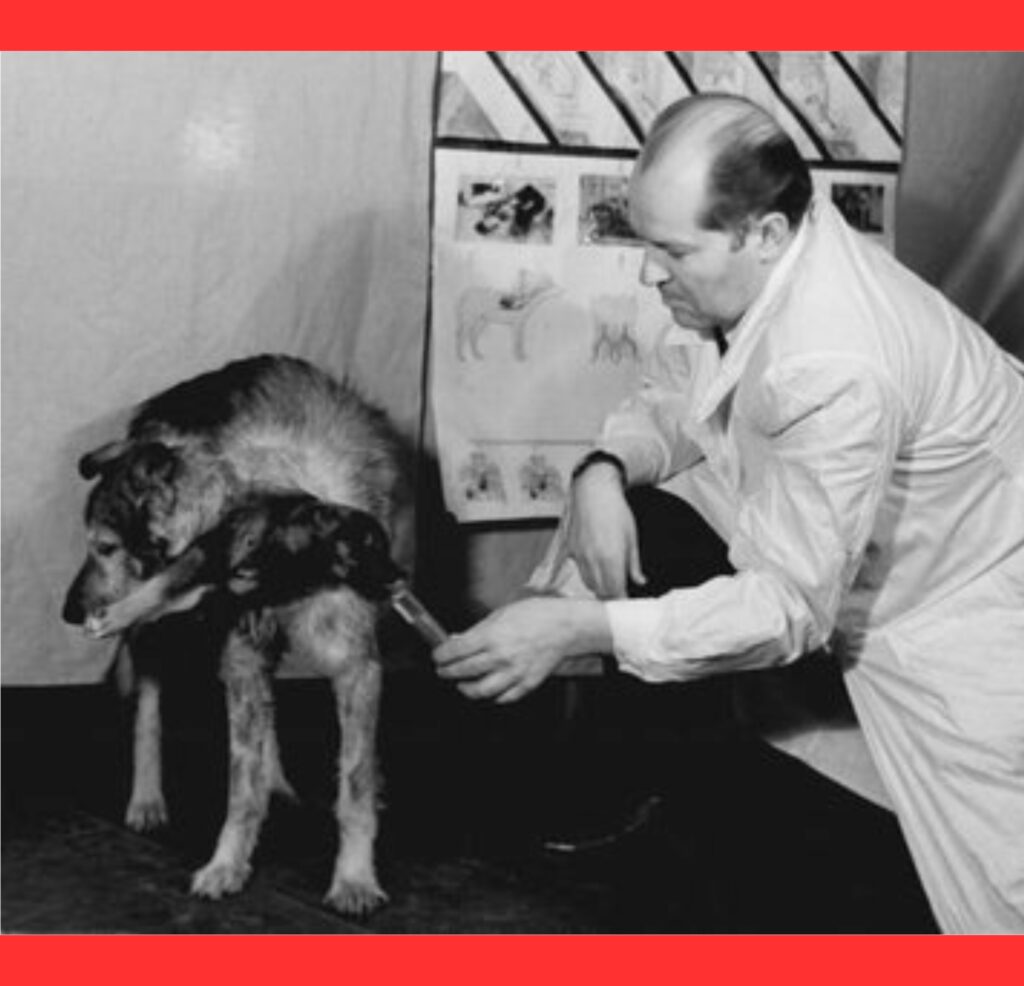
Challenges mounted quickly despite initial success.
Immune responses caused swelling and tissue breakdown at the graft site. Infections threatened stability, and the dogs required constant care to prevent self-injury from conflicting instincts.
One remarkable specimen endured for nearly 29 days—close to a full month—before complications proved fatal.
Demikhov’s experiment sparked global controversy and fascination.
Critics decried it as cruel, while supporters hailed it as revolutionary.
Photos of the two-headed dog circulated widely, symbolizing Soviet scientific ambition during the Cold War.
Though the animal eventually succumbed, the procedure advanced understanding of vascular surgery and immunosuppression.
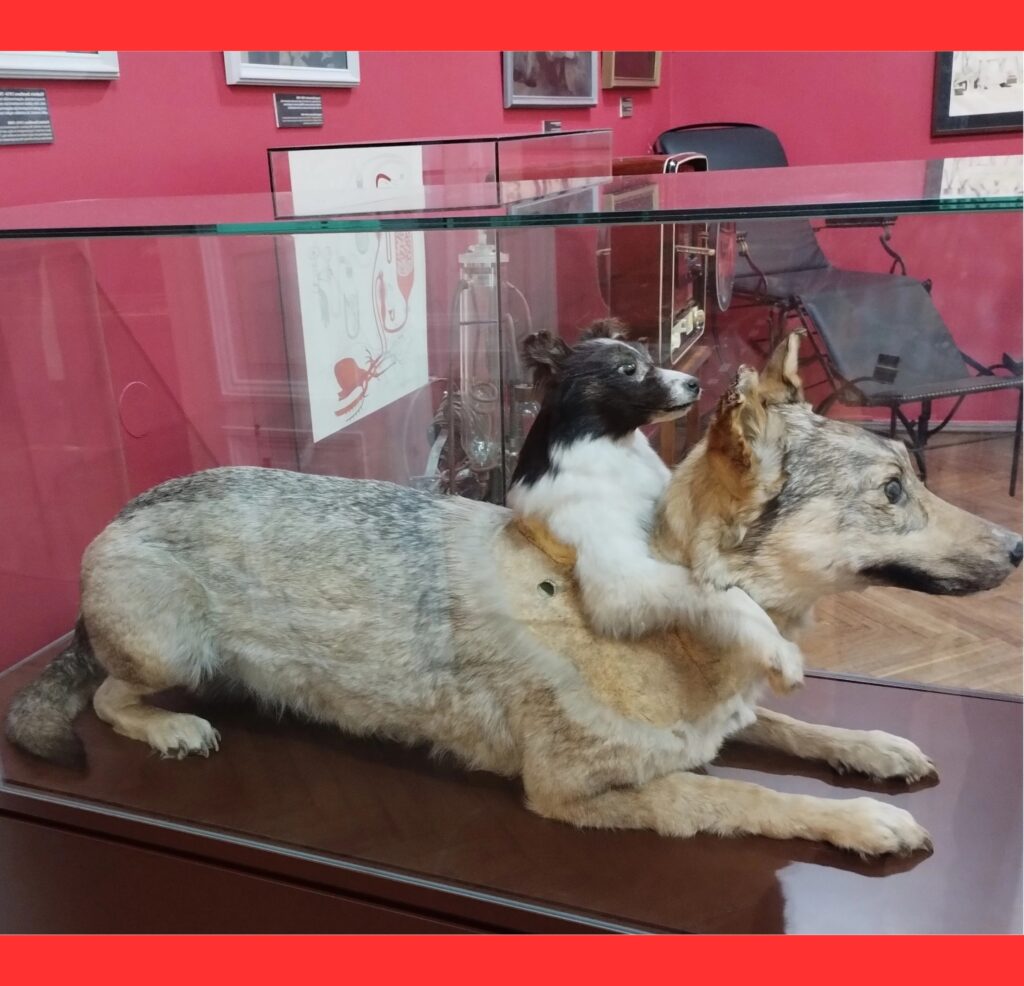
Today, Demikhov’s legacy endures in modern transplantation.
His techniques influenced heart and lung transplants that save human lives annually.
While animal ethics have evolved dramatically, his 1954 breakthrough remains a testament to bold innovation amid scientific isolation.
The two-headed dog, though short-lived, opened doors to possibilities once deemed impossible.