
In the heart of Kano, Nigeria, Rahma Haruna’s extraordinary life captured global attention.
Born healthy in a village near the city around 1997, she seemed destined for a typical childhood.
However, fate had other plans for the young girl.
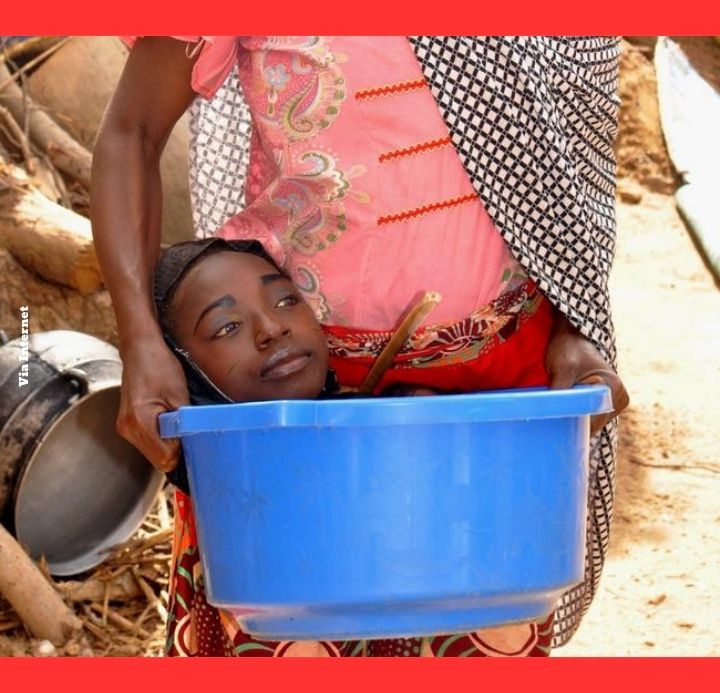
At merely six months old, Rahma developed a rare, mysterious condition that halted the growth of her limbs.
Her arms and legs ceased developing normally, leaving her with severe physical limitations and constant pain.
Medical experts in the region were unable to diagnose or treat the ailment effectively.
The debilitating condition made even the smallest movements agonizing for Rahma.
Traditional mobility aids proved insufficient, and her family worried about her spending her days immobile in bed.
They sought ways to include her in family activities despite the challenges.
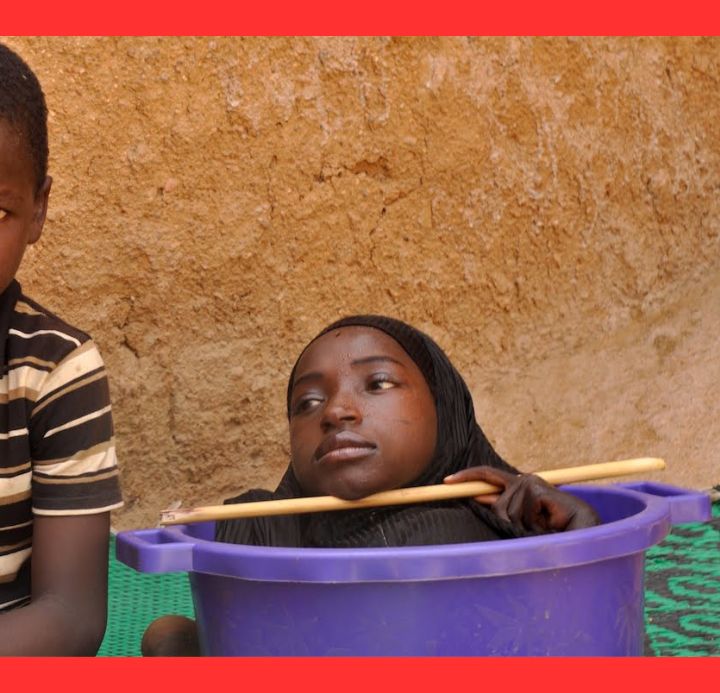
In a display of love and ingenuity, Rahma’s family began carrying her in a simple plastic bucket.
This makeshift solution allowed them to transport her easily around their community in Kano, providing her with a sense of participation in daily life rather than isolation.
For nearly 19 years, this plastic bucket served as Rahma’s primary mode of conveyance and resting place.
It symbolized both her profound struggles and the unwavering support of her devoted family members who cared for her tirelessly.
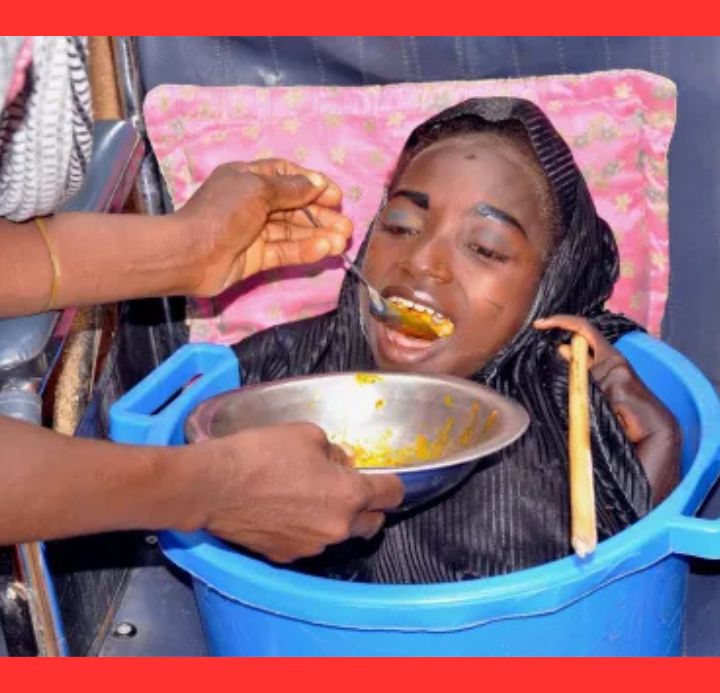
Despite enduring immense hardships, Rahma maintained a remarkably positive outlook.
She often thanked God for her blessings and harbored dreams of someday owning a small grocery shop, demonstrating incredible resilience and hope.
Her father, Hussaini, dedicated years and family savings—equivalent to about one million naira—to seeking treatments and cures.
Yet, the enigmatic condition persisted, defying conventional medical interventions available to them.
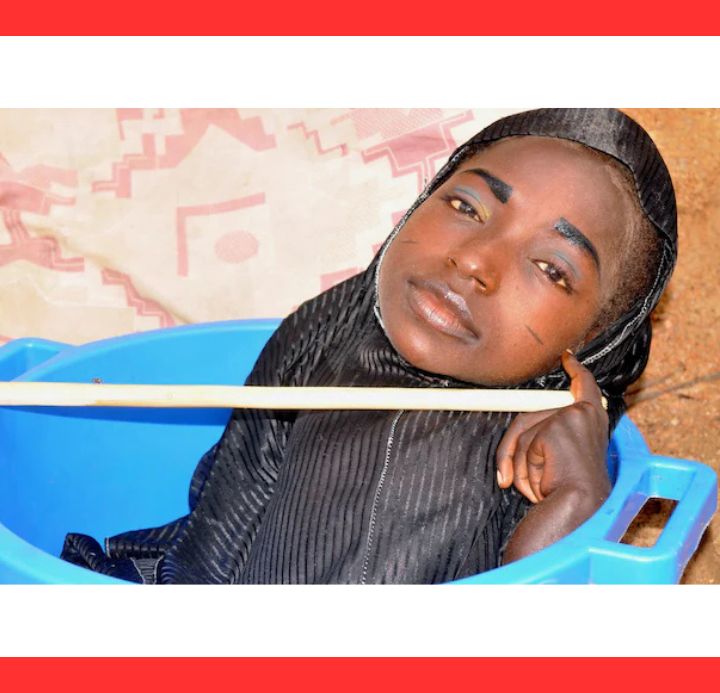
In mid-2016, a poignant photograph taken by Nigerian photographer Sani Maikatanga of Rahma in her bucket went viral worldwide.
The image highlighted her story, sparking compassion and leading to donations, including a wheelchair that improved her mobility.
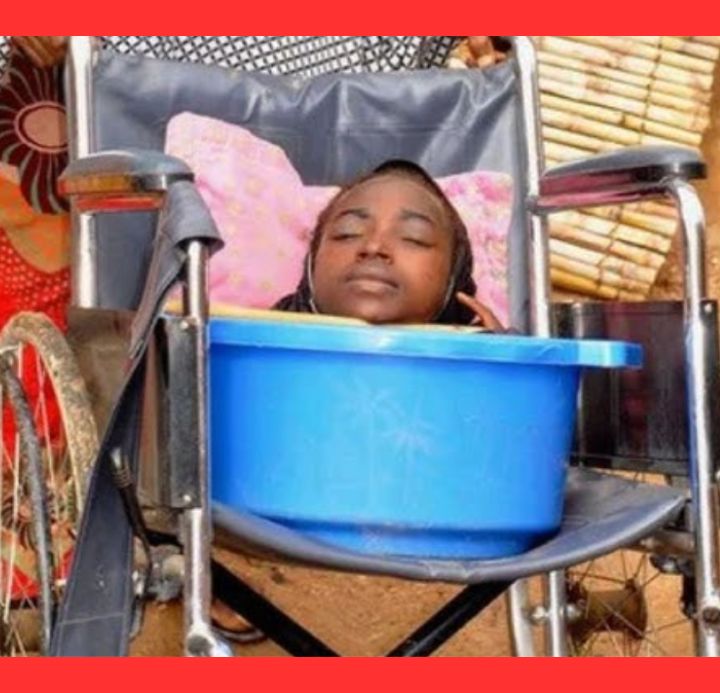
Assisted by her younger brother Fahad and other relatives, Rahma participated in begging for alms on Kano’s streets.
This helped the family meet basic needs while keeping her engaged with the outside world.
Rahma Haruna’s tale brought awareness to rare congenital conditions and the daily realities faced by disabled individuals in resource-limited settings.
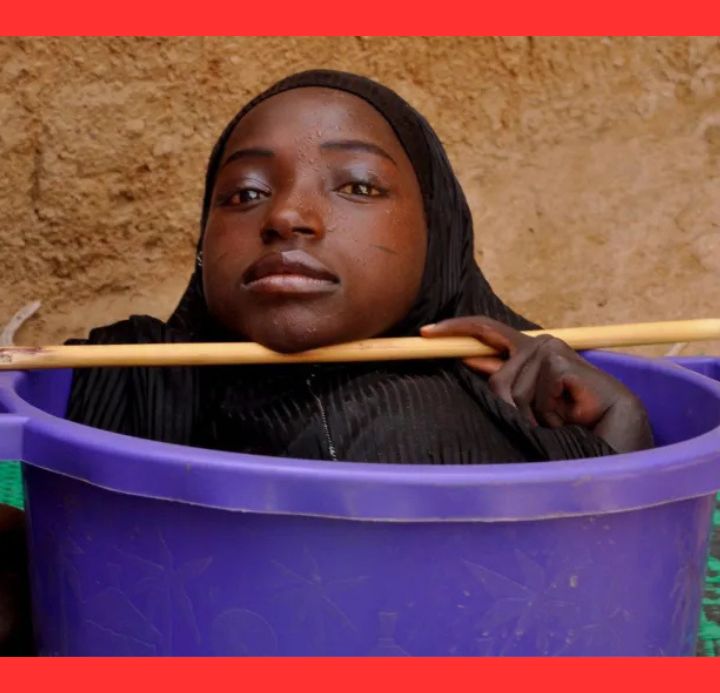
It emphasized themes of family bonds, human endurance, and societal empathy.
Tragically, Rahma passed away on December 25, 2016, at age 19 from unknown causes.
Her brief life remains a powerful testament to strength amid adversity, continuing to inspire many years later.